Family safety7 min read
Pet emergency contacts: who to include and what they need to know
A guide to building your pet’s emergency contact list — who to include, what they need to know, and how to keep it accessible when it matters.
The Driyu team
Pet safety editorial

Pet emergency contacts are the people who can step in for your pet when you can’t — a missed flight, a hospital stay, a found-pet call. The right list is small (2–3 people), local enough to act, and informed enough to know what your pet needs in the first hour. Talk to each person before listing them.
Most pet owners think about emergency contacts the same way we think about smoke detectors — once a year, or whenever something almost goes wrong. This guide walks through what a useful emergency contact list looks like, who to put on it, and what the people on it actually need to know.
Why emergency contacts matter
A pet’s emergency contacts cover the gap between “something happened” and “the owner is reachable.” The middle of an emergency is the worst time to figure out who has a key, who can pick up a pet from a vet, or who can decide whether to start a search. A short, current list of trusted people, and a 30-second conversation with each of them ahead of time, is what closes that gap.
The three layers of an emergency contact list
Most useful emergency contact lists fit into three layers. You don’t need someone in every layer — most households work with two contacts plus the vet — but it helps to think of the role each person plays.
- Primary contact (1 person). The person you’d want a finder, a vet, or a sitter to reach first if you can’t answer. Usually a partner, a close family member, or a trusted neighbor. Local enough to physically help if needed.
- Backup contact (1 person). Reaches the same kind of decisions but lives in a different household or area. Useful when the primary is also unavailable (e.g., you and your partner are traveling together).
- Professional contact (1 person). Your vet’s phone number and clinic name. Pair this with the primary/backup, never as the only contact.
What each contact actually needs to know
A short, written summary that an emergency contact can refer to is more useful than a phone call in the moment.
- Your pet’s name, age, breed, and a photo.
- Where their food, medication, leash, and carrier live.
- Your vet’s name and phone number. And whether the vet is authorized to make decisions on your behalf if you’re unreachable.
- Any active medications with names, dosages, and timing.
- A house key or smart-lock code, if they may need to physically check on the pet.
- A short note about temperament. “Friendly with strangers but anxious in cars” is more useful than a long personality essay.
Who not to include (without asking)
The most common mistake on emergency contact lists is including someone who hasn’t been asked. Even close family deserves a heads-up that their phone might ring about a missing pet at 9 p.m. on a weekday. Adding a name without a conversation creates two problems: the person isn’t prepared to help, and they may not even pick up a call from a number they don’t recognize. A 30-second “hey, can I list you on Charlie’s emergency profile?” solves both.
Where to keep the list
Two places, ideally: physically (inside a pet go-bag, taped inside a kitchen cabinet, or printed on a fridge) and digitally (in your phone, on your pet’s profile, or in a shared family note). Physical copies survive when phones don’t. Digital copies are easier to update. Both layers protect you when one fails.
How a Driyu profile fits in
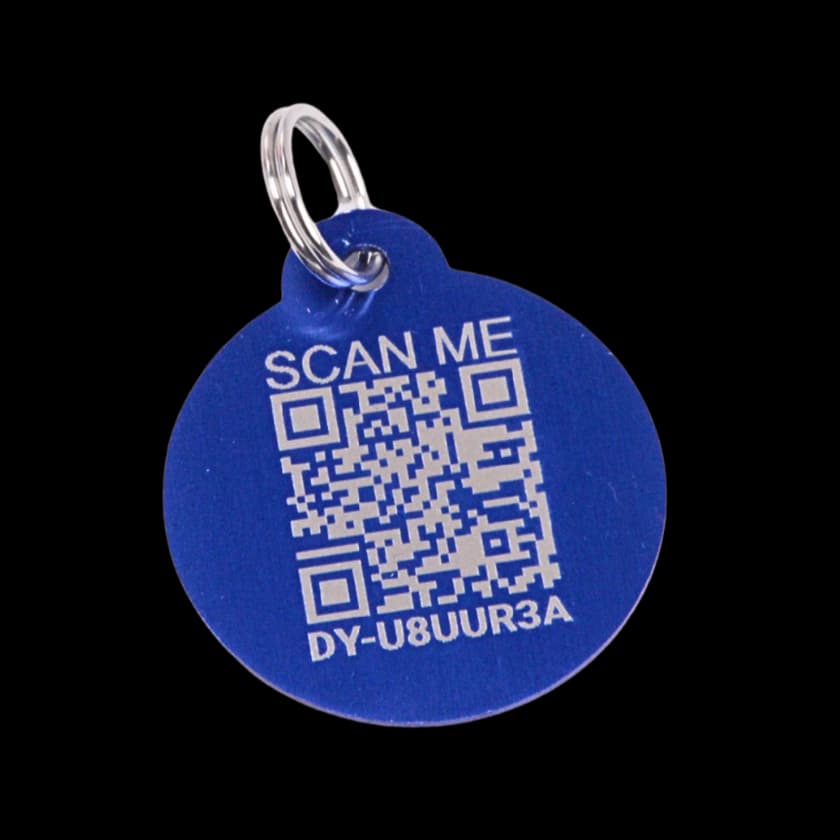
A Driyu profile gives you one place to keep your pet’s name, photo, your contact details, and your emergency contacts together. You decide whether your emergency contacts appear on the public scan page when a finder scans the tag — that’s a single toggle in your profile’s privacy controls that turns the whole list on or off. The public-facing version of an emergency contact is typically just a name and a phone number; the private version (which you keep for your own use and for sitters or family) can include more detail. You can update the list any time, and the change takes effect the next time someone scans the tag.
A short FAQ
How many emergency contacts do I need? Two is a good baseline — a primary local contact and a backup. Three is better if your household travels often. More than that often dilutes the list.
Should my emergency contact be someone in my house? Usually not — the point of an emergency contact is that they’re reachable when you can’t be. Someone outside your immediate household, but close enough geographically to help quickly, is ideal.
Do my emergency contacts need to know my pet? It helps. A contact who has met your pet, knows their name, and can recognize them on sight is much more useful than someone who’s only seen photos.
Can I list my vet as an emergency contact? Yes — your vet’s name and phone number are valuable on any pet profile. But your vet is usually not the right primary emergency contact for non-medical situations like a missing pet — pair them with a friend or family member.
Should I tell my emergency contacts they’re listed? Yes — always ask first. Make sure they understand they may receive a call about a found pet, a vet decision, or a sitter coordination. A 30-second conversation now saves a lot of confusion later.
Emergency contacts are one of the most underused parts of a pet’s safety setup. Two trusted people, a few details written down, and one short conversation each — and you’ve covered most of what most households will ever need.
Sources and further reading
- ASPCA — Disaster Preparedness for Pets. Pet welfare organization with disaster-specific pet preparedness guidance, including emergency contact lists. aspca.org
- American Veterinary Medical Association — Pet Disaster Preparedness. Veterinary professional body with planning guidance. avma.org
- Ready.gov — Animals and Pets. Federally maintained emergency preparedness resource for households with pets. ready.gov/animals