
What to do in the first hour your pet is missing
A calm guide for the first hour your pet is missing: what to look for, who to tell, and how to stay organized when minutes feel long.
THE DRIYU JOURNAL
Lost Pet Recovery
In this reading
If your pet just went missing, you’re probably not thinking clearly. The minutes feel long. Your mind keeps racing between the next step and every story you’ve heard about pets that didn’t come home. This guide walks through the first hour — what to look for, who to tell, and how to stay organized while you focus on the search. None of these steps guarantee an outcome. Each one helps make the next moment easier.
What this piece covers: the first sixty minutes after a pet first goes missing. Where to look. Who to contact. How to update the records that finders use. What happens when a Driyu tag is involved.
What it does not cover: detailed search techniques after the first day, lost-pet flyer design, pet-recovery services in your area, or anything medical. If your pet has been missing for more than a few hours, please refer to a longer recovery guide or contact a local lost-pet organization.
1. Take a breath, then gather what you know
Start promptly. Record the facts and ask helpers to search, report, and check contacts in parallel:
- When you last saw your pet
- Where you last saw them
- What they were wearing (collar, tag)
- Any recent changes in their behavior or routine
You’ll repeat this story to neighbors, finders, and shelters within the next hour. Having it written keeps the details consistent.
Why speed matters. Recovery outcomes depend on many factors, but one pattern is consistent: when contact details are current and people are alerted quickly, owners can act earlier with fewer preventable delays.
2. Look where they’re most likely to be
Cats and dogs behave differently when they’re lost.
Dogs may move or hide. Check the last-seen area and plausible routes using safe access and current sightings. Ask people not to chase, surround, or grab a frightened dog.
Indoor cats may hide close to home, so check enclosed spaces and nearby cover carefully, with permission. Do not assume a fixed one-to-three-block radius or that silence means the cat is safe. Repeat checks and expand with new evidence and local help.
If multiple people can search, divide the area: one person stays at home in case the pet returns; others fan out.
3. Tell people, quickly
Neighbors, walkers, and people in the immediate area often notice first. Reach those people first.
- Knock on doors within a few blocks. A short, kind ask: “We’re looking for [pet’s name]. Have you seen them in the last hour?” Leave a phone number on a sticky note if no one answers.
- Post in local groups. Neighborhood apps and local social-media groups reach people fast. A photo, a description, the last known location, and your phone number are enough.
- Contact shelters and animal services promptly and complete their lost-pet reporting process. A phone call alone may not create a searchable report; ask how to check admissions and follow up.
Together, these three cover the early ground. The first hour is about reaching the people most likely to spot your pet, not about finishing a long checklist.
4. Update the records that finders use
While someone keeps watching home and the search radius, take a few minutes on the records that finders rely on.
Check the microchip registry’s current contacts and missing-pet flag. Correct information if needed through its own process. Updating Driyu does not update the registry.
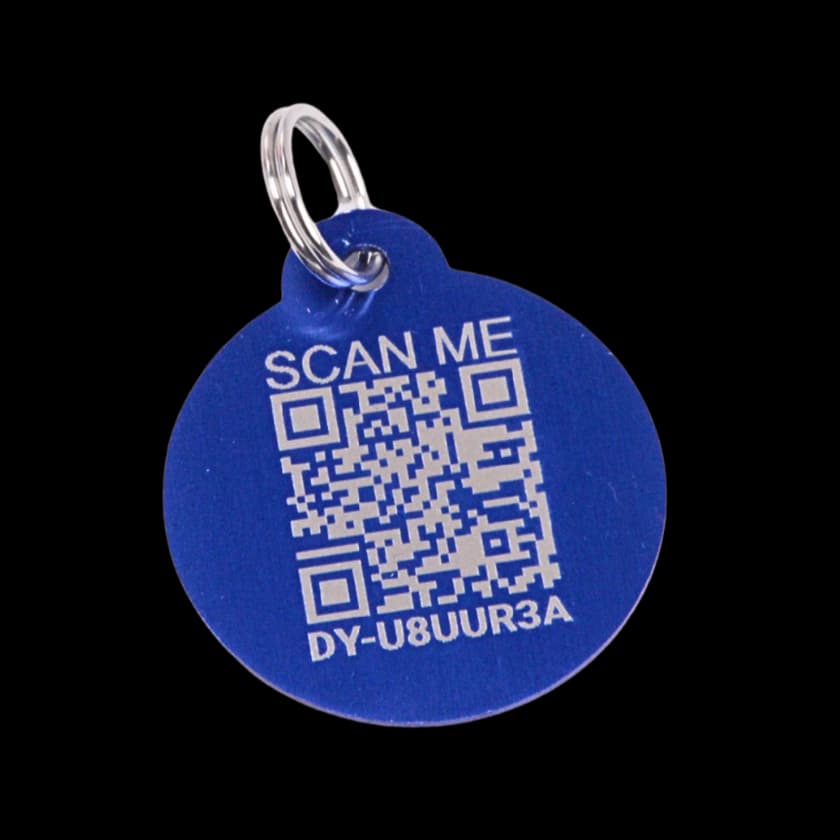
Visible identification and a microchip offer separate routes. An engraved number can be read directly; a QR page needs a compatible phone and internet, and a microchip needs a compatible reader and registry lookup.
In Driyu, mark the pet lost and review Account Settings → Public recovery visibility. Five account-level controls cover phone, email, city, state, and emergency contacts, with at least one direct contact option kept visible. The owner name and saved public pet details are separate; review the actual tag page.
The found-pet form appears when the pet or tag is marked lost. Saving an accepted report starts notification attempts, without guaranteed delivery. Opening the page alone does not alert the owner. A visible phone offers a direct call route; do not assume every family member or emergency contact receives every event.
Driyu’s recovery features stay with you on the free plan. Even if you’ve canceled a paid subscription, your activated tags and lost-pet alerts remain.
5. When someone reaches out, stay open and verify
In the first hour, you may also get calls or messages from people who think they’ve spotted your pet. A few notes that help:
- Listen. Even uncertain reports can narrow where your pet might be.
- Ask for a current photo or a detail not already in public posts. Never send verification codes or advance payment to an unverified claimant; arrange a safe reunion with local help when needed.
- Stay reachable. Keep your phone charged and your ringer on. If someone is calling about your pet, the second they reach voicemail is a hard moment for both of you.
Treat a Driyu report as information to check, not proof of identity or possession. Clarify whether the person has the pet or only saw it.
What to do next
Continue checking sightings, admissions, enclosed spaces, and contacts. Adapt the search with local recovery help rather than expanding by a fixed hourly rule. You can ask for that help immediately.
Whatever happens next, the work of the first hour was not wasted. Speed, accurate information, and reach are the things that turn small chances into bigger ones.
If your pet is home: take a breath. If they’re not yet: keep going. Pets deserve protection that feels as constant as the love families have for them, and you’re already part of that.
Sources and further reading
- Lord and colleagues (2007). Search and identification methods that owners use to find a lost dog. JAVMA 230(2):211–216.
- AAHA — Microchip identification and registration.
- Missing Animal Response Network (MARN) — Lost Cat Behavior. Behavioral research on lost-cat recovery patterns. missinganimalresponse.com
- Huang, L., Coradini, M., Rand, J., Morton, J., Albrecht, K., Wasson, B., Robertson, D. (2018). “Search Methods Used to Locate Missing Cats and Locations Where Missing Cats Are Found.” Animals, 8(1), 5. doi.org/10.3390/ani8010005
- American Kennel Club — Lost Dog Recovery Resources. akc.org (search “what to do if your dog gets lost”).
- ASPCA — Lost Pet Recovery Resources. aspca.org
The cited research reports search experiences and recovery locations; it does not prescribe a guaranteed radius or schedule. The cat study and MARN methodology share an author and are not wholly independent sources.