
Pet medical privacy: who should see what, and when?
Pet medical records and human health records have different privacy rules. This guide focuses on the information a vet, caregiver, or finder needs and what Driyu makes public.
THE DRIYU JOURNAL
Privacy & Trust
In this reading
Choose information for each purpose: clinical care, a caregiver handoff, or public recovery. Veterinary confidentiality and access rules vary by location; a public tag page is not a private medical record.
A note about privacy
Public recovery pages may show the information the owner chooses to provide or make visible. Review your settings and Driyu's current Privacy Policy for the latest details. Do not share information publicly that you are not comfortable making visible to a finder.
HIPAA concerns protected human health information handled by covered entities; it is not a pet medical-record privacy framework. Veterinary laws, consent requirements, and other privacy obligations may still apply. Ask your clinic about the rules and process that govern its records.
Who actually sees pet medical information
In normal pet ownership, four groups end up seeing some slice of your pet’s information. The right amount to share is different in each case.
- Your veterinarian. Gets the full picture — history, medications, conditions, lab work. Records typically stay with the practice; you can request copies.
- A sitter, boarder, or groomer. Needs the operational subset — current medications, allergies, behavior notes, vet contact, your contact, emergency contacts.
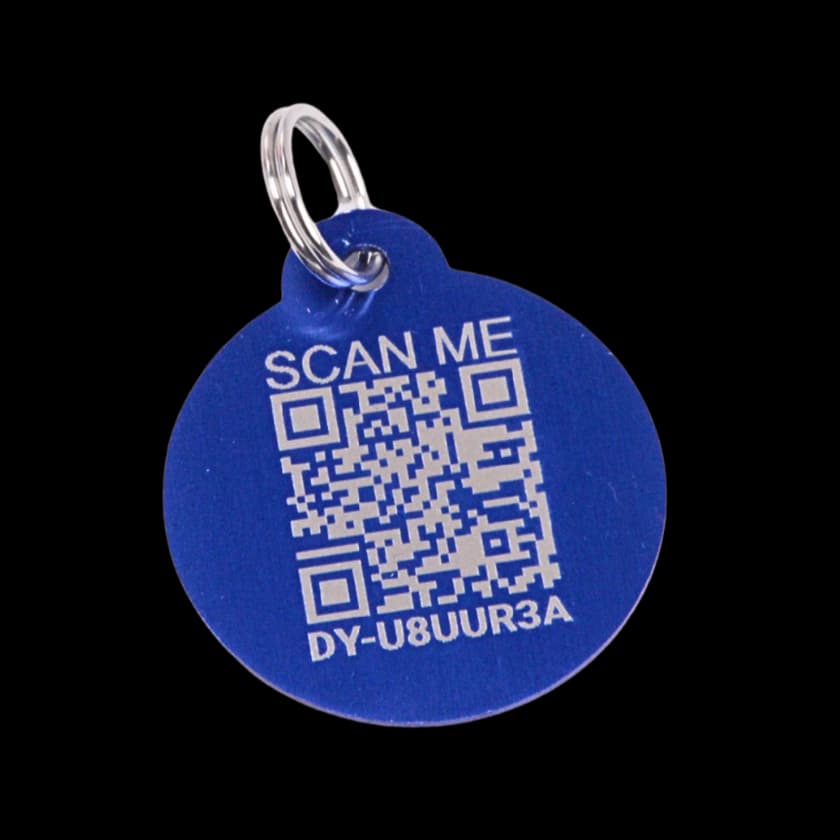
- A finder (someone who scans your pet’s tag). Needs the minimum to get the pet home — a name, a way to reach you, and any medical alert that affects how they should handle the pet in the next hour.
- Anyone with the scan link. The recovery page is public. It does not verify that a visitor has found your pet before showing the available details. Review it with that audience in mind.
The Driyu privacy controls (in plain English)
The scan page is separate from private care records and Family Sync access. Five owner-account settings cover phone, email, city, state, and emergency contacts. Pet identification, the owner’s name, and supported saved pet details can be public without individual contact switches. Medical alerts have their own scan setting:
- Phone — show or hide the saved owner phone.
- Email — show or hide the saved owner email.
- City — contributes to the location label only when both city and state are visible and populated and the owner contact card is shown.
- State — hiding it also removes the combined city/state location label.
- Emergency contacts — one setting controls the active saved list on the public page.
- Medical alerts — a saved alert appears publicly only when active and enabled for scans. If no alerts meet those conditions, older allergy information may appear. Review both the title and description of any public alert.
Keep at least one reachable contact channel available. Review the saved page from another phone, including public text and photos. For more detail, see what Driyu shares.
When a medical alert is worth making public
A short, vet-informed recovery note such as “Needs prescribed medication; please contact the owner promptly” can be useful. Do not invite an untrained finder to improvise doses or treatment. Keep detailed instructions in private care records and share them with authorized caregivers. Family Sync roles provide different levels of access; check them before inviting someone.
How Driyu notifications work (and what we do not do)
Opening a tag page alone does not send the owner a found-pet notification. In Lost Mode, the page offers a found-pet report; an accepted report starts a notification attempt, without guaranteeing delivery. The tag is not a live GPS tracker. See when Driyu notifies the owner for the different actions and their limits.
Sharing records with a new vet or specialist
Ask the clinic how to request copies or arrange a transfer, including consent, format, timing, and any permitted fee. Explain urgent care needs rather than assuming a fixed turnaround. Keep your own copies; Driyu medical records and Cloud Vault can help organize supported records but do not automatically request or transmit a clinic’s file.
Sources and further reading
- AVMA — Veterinary Medical Records. Veterinary medical association guidance on records, ownership, and owner access. AVMA — Principles of veterinary medical ethics
- HHS — Human health information and HIPAA covered entities.
- Texas Board of Veterinary Medical Examiners — Practice compliance resources; consult your own jurisdiction’s rules.