What NOT to put on a public pet profile
A profile can help a stranger contact you without telling them your whole household’s story.
THE DRIYU JOURNAL
Privacy & Trust
In this reading
Choose the useful contact details. Keep household access, account information, and detailed records out of the public view.
A note about privacy
Public recovery pages may show the information the owner chooses to provide or make visible. Review your settings and Driyu's current Privacy Policy for the latest details. Do not share information publicly that you are not comfortable making visible to a finder.
Start with the word public.
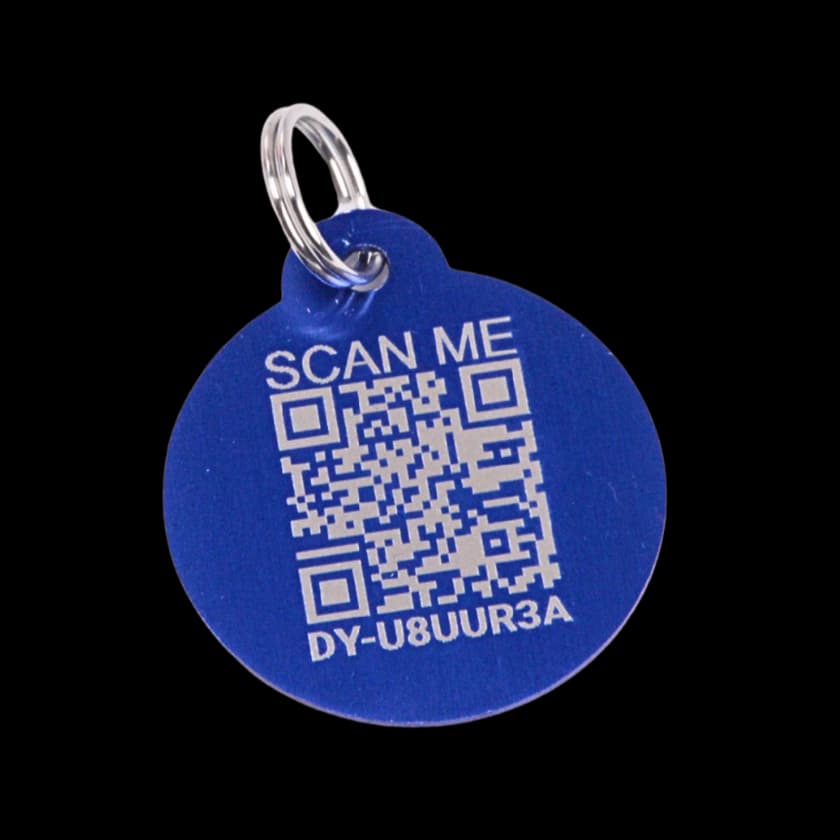
A QR tag opens a public link. It is useful because a finder can read it without signing in, but the code is not a password. Someone who receives the link can open it too.
Give private details a private home.
Before adding a public note or photo, ask whether it helps someone identify your pet or contact an appropriate person. If it only reveals more about your household, leave it out.
- House keys, door codes, daily schedules, and home addresses.
- Passwords, payment details, identity documents, and account information.
- Full medical files and contact details someone has not agreed to share.
- Photos that unnecessarily show house numbers or other identifying backgrounds.
Choose the contact path.
Driyu’s owner-account recovery settings have five switches: phone, email, city, state, and emergency contacts. They do not hide the owner’s saved name or every pet field. Keep a reachable direct method visible: phone, email, or emergency contacts.
The account home-address field is excluded from the scan page, but an address in public text or a photo can still appear. Saved medical alerts must be active and enabled for scans; older allergy text may appear when no alerts qualify. The full private medical record is separate.
Notes need their own review.
Temperament and behavior notes and distinguishing marks can appear publicly. Saved finder instructions appear when the pet or tag is marked lost. These fields are not a private sitter notebook. Share home access details and specific hiding places privately.
Microchip details can appear when the pet is marked as microchipped and a number is saved. The five contact switches do not hide that number; review it separately.
Review the result together.
Agree with caregivers on what should appear publicly. A saved contact does not grant account access; shared access depends on an invitation and the assigned role. Save your choices, inspect the public page and repeat when the information changes.
Resources and next steps
- Writing finder instructions on your pet profile: 6 lines that matter
- Why pet privacy settings matter on a scannable tag
- Your pet’s privacy: what Driyu shares (and what it doesn’t)
- Federal Trade Commission — Consumer privacy basics · New tab
- AVMA — Pet identification · New tab
- Privacy Rights Clearinghouse · New tab
- Learn more about Driyu →