
Why pet privacy settings matter on a scannable tag
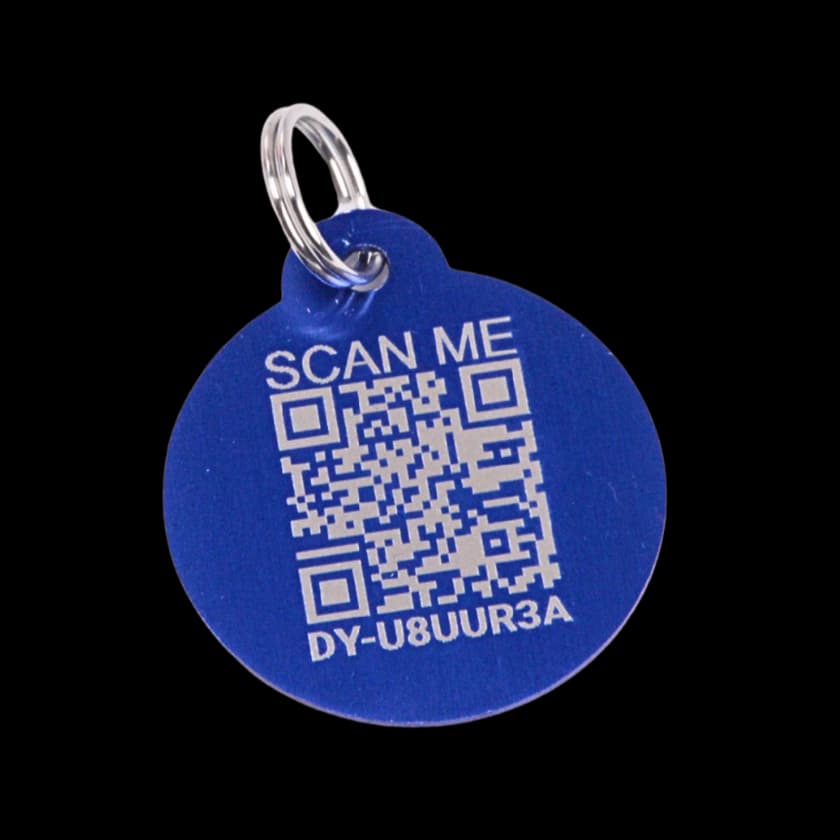
A linked QR tag opens a public recovery page. Review it carefully so you understand which contact and pet details are visible.
THE DRIYU JOURNAL
Privacy & Trust
In this reading
Quick answer: A tag opens a public recovery page. Five owner-account controls cover phone, email, city, state and emergency contacts. They do not control every pet detail. Review public text, photos, medical-alert settings and Lost Mode as well as those contact switches.
A note about privacy
Public recovery pages may show the information the owner chooses to provide or make visible. Review your settings and Driyu's current Privacy Policy for the latest details. Do not share information publicly that you are not comfortable making visible to a finder.
Most pet owners think about privacy in the abstract — they do not want strangers knowing too much — but they rarely think about the very specific surface where that abstract preference becomes concrete: the public page behind a QR tag. This guide is about that page. What appears on it, why each choice matters, and how to choose deliberately.
The scan is a public moment
A linked Driyu tag page is public and can be opened with internet access without a finder account. Anyone with the link may read it. The account street-address field is excluded, but free text and photographs can reveal an address or other private information.
What does the public page actually show?
The owner account has five public-contact visibility controls, each visible by default. Keep at least one reachable contact channel available:
- Phone — the most useful single field; default visible.
- Email — an alternative contact path; default visible.
- City — one part of the optional location label. The page needs both city and state visible and populated, plus an owner contact card.
- State — the other part of that label. Hiding either city or state removes the combined location.
- Emergency contacts — the full list, as one toggle; default visible.
Pet identity and recovery information have separate display rules:
- Recovery details — temperament and behavior notes and distinguishing marks can appear when saved. Saved finder instructions appear only when the pet or tag is marked lost. Medical alerts and microchip details have the conditions explained below.
- Identification fields. The pet’s name and photo and the owner’s name are public. The five contact switches do not hide the owner’s name.
The account home-address field and the full private medical record are not part of the public scan page. However, saved temperament and behavior notes and distinguishing marks can be public; they are not private notebook fields. An address typed into public text or visible in a photo can still be exposed. See what Driyu shares for the recovery-page details.
Why each toggle has a meaningful reason
Each public field exists because there is a real reason a finder might need it:
- Phone. The fastest path. A finder calls. No app, no signup, just a phone number.
- Email. A backup when a phone call fails or when a finder is in a foreign country.
- City and state. Helps a finder confirm they are seeing the right pet. Especially useful when shelters or rescues check the page.
- Emergency contacts. A consenting, reachable person may help when you cannot answer. Discuss what they can do and arrange any necessary medical authorization separately.
Choose the contact channels that work for your household and check the actual scan page. These settings belong to the owner account, rather than a separate set of switches for each pet.
Situations where reviewing privacy matters most
A short list of moments to glance at the toggles:
- After a move. Old city, new city — the address-related fields probably need to change or to be turned off until the new city information is correct.
- After a phone-number change. Save the new number, review its visibility, and check the public result.
- After adding or removing an emergency contact. Check that the remaining contacts are current and agree to be listed. Removed contacts are excluded from the scan-page query; leaving visibility on does not restore them.
- After a difficult life event. A separation, a stalking concern, a public dispute — reasons to make a deliberate choice about what is publicly visible.
- When a pet has been lost and recovered. Hindsight often shifts what an owner wants visible; review after a recovery.
What about medical information?
A saved medical alert appears on the scan page only when it is active and enabled for scans. If there are no such alerts, older allergy information may appear instead. A microchip number appears when the pet is marked as microchipped and a number is saved. These public details are different from the full private medical record. Review what is actually visible before relying on the page.
A useful starting point
Choose settings for your circumstances rather than treating this as a universal privacy recommendation:
- Keep a reachable phone visible if that is an appropriate contact route for you.
- Email toggle on if you check email regularly.
- Decide whether showing city and state suits your circumstances.
- Show emergency contacts only with their agreement, and keep their details current.
- The account home-address field is excluded from the scan page. Keep addresses and entry codes out of public text and photos too.
- Check each saved medical alert’s scan visibility and active status, any older allergy text, and the public microchip details.
From there, adjust if the household has specific reasons. The point is the act of choosing.
Where Driyu fits, honestly
Review the five owner-account contact settings when you set up the tag and when your circumstances change. Keep a reachable contact route available, then inspect public notes, photos and any alerts separately. See the profile refresh guide for a routine review.
Sources and further reading
- Federal Trade Commission — Privacy and consumer information. Plain-language consumer guidance on what counts as personal information online. consumer.ftc.gov
- Your pet's privacy: what Driyu shares (and what it doesn't)
- ASPCA — Finding a lost pet