
Your pet's privacy: what Driyu shares (and what it doesn't)
A plain-language guide to what appears on a Driyu public scan page, what stays private, and the per-field controls you have as an owner.
THE DRIYU JOURNAL
Privacy & Trust
In this reading
A Driyu scan page is public to anyone with its link. Five account settings control phone, email, city, state, and emergency contacts; they do not hide every field. The owner’s saved name and pet details can appear independently. This article explains the current scan interface; consult the Privacy Policy for the legal terms.
A note about privacy
Public recovery pages may show the information the owner chooses to provide or make visible. Review your settings and Driyu's current Privacy Policy for the latest details. Do not share information publicly that you are not comfortable making visible to a finder.
Review both the account settings and the actual public page after saving changes. A label such as private notes should never be assumed to apply to every text box: behavior notes and distinguishing marks can be public.
What appears on the public scan page
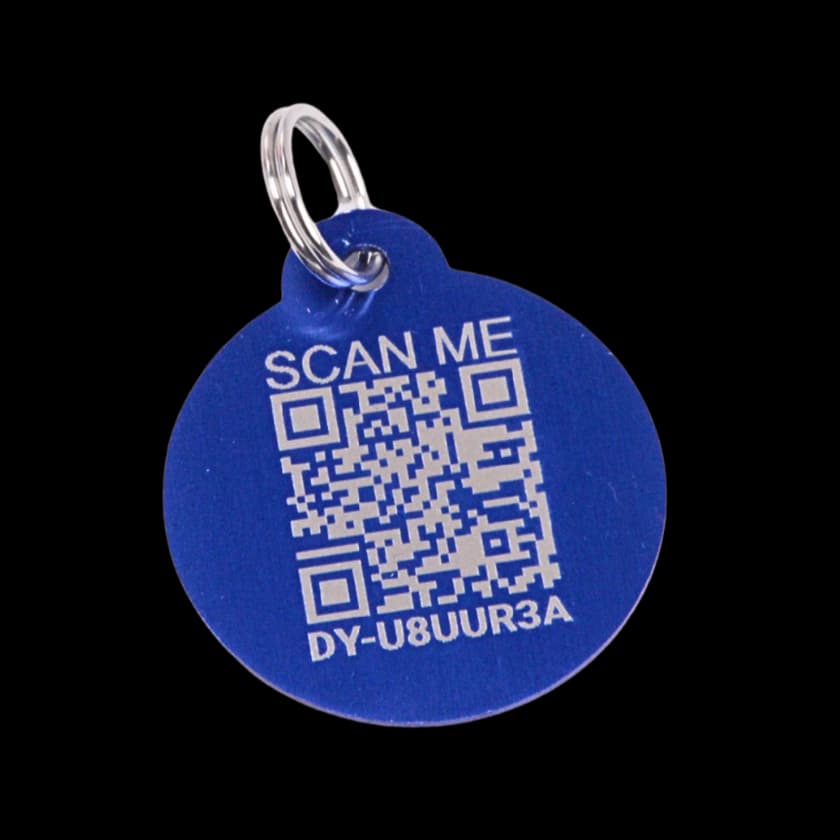
When a finder scans a Driyu tag, the page that opens shows:
- Pet name, photo, and the owner’s saved first and last name. The five contact switches do not hide the owner’s name.
- Your phone number — toggleable. The most direct way for a finder to reach you.
- Your email — toggleable. Useful when you can’t answer a call.
- City: its visibility switch is separate, but the current page displays city and state together only when both are visible and saved, in an owner contact card with visible phone or email.
- State: check it together with city on the actual scan page; a switch alone does not guarantee display.
- Your emergency contacts — toggleable as a group. When on, the contacts you have added appear on the scan page.
- Medical alerts: active alerts enabled for scans may appear. Older allergy text may be shown if there is no qualifying alert.
- Saved breed, distinguishing marks, and behavior or temperament notes can appear. A microchip number appears when the pet is marked as microchipped and a number is saved. Finder instructions depend on Lost Mode.
What does NOT appear on the public scan page
- The account street-address field is not displayed. An address typed into public notes or included in a photo could still be exposed.
- Your live GPS location. Driyu’s QR tag is a printed code, not a GPS device.
- The full private medical record and private documents are not displayed on the scan page. Selected public alerts are separate.
- Private care records remain separate from the scan view. Share care through the appropriate Family Sync role; do not put confidential handoff details in public behavior notes.
- Avoid entering schedules, children’s details, addresses, or other sensitive information in any public field or photo.
How owner control works
Review the five account-level controls in Public recovery visibility. They default to visible, and the app requires at least one direct contact option to stay visible: phone, email or emergency contacts. Saved changes apply when the public page is loaded again.
When notifications happen
Opening a tag page records a scan without, by itself, sending an owner alert. When the pet or tag is marked lost, a finder can open and submit the report form. A successfully saved report starts notification attempts; delivery is not guaranteed. Do not rely on declining location permission to notify the owner. If automatic location lookup fails or you choose not to share it, enter a location manually and submit the report, or use a visible contact option. A location error does not prove that anyone received an alert.
External-partner data
Consult the Privacy Policy for the stated purposes, recipients, retention, and rights. This interface guide does not make additional promises about partner data sharing.
Reviewing your settings
Sign in, open Account Settings, and review Public recovery visibility. Update your saved contact details separately when needed. Scan a tag again to check what the public page shows.
A short FAQ
Does Driyu sell my data? Please refer to Driyu’s current Privacy Policy for the most accurate, up-to-date statement about how data is handled.
Can I hide my phone? Yes, in the account’s public recovery settings. Keep another direct option visible: email or emergency contacts. The found-pet form is conditional on Lost Mode and is not a replacement for the required direct contact option.
Can an address become public? The account street field is not shown, but text or images you publish can disclose an address. Review the entire page, not only its switches.
Does every scan identify the finder or alert me? No. Opening a public page does not authenticate who opened it or send a found-pet alert. A submitted report can start notification attempts, with no delivery guarantee.
What happens if I delete my account? Account deletion is handled per Driyu’s current Privacy Policy. Some information may be retained for security or legal reasons; the policy explains what and for how long.
Check public fields deliberately, keep private care information separate, and revisit the actual page when contacts or circumstances change.
Sources and further reading
- Driyu Privacy Policy. Driyu’s current and authoritative data and privacy policy. driyu.com/privacy
- Driyu Recovery Privacy. How recovery-flow data is handled. driyu.com/recovery-privacy
- Driyu Cookies Policy. Cookie usage on driyu.com. driyu.com/cookies