
Walking dogs in extreme heat: a paw and body safety guide
Heat and hot surfaces can make an ordinary walk unsafe. Choose cooler conditions, watch your dog closely and know how to seek urgent help if overheating is suspected.
THE DRIYU JOURNAL
Emergency & Safety
In this reading
Quick answer: Avoid hot surfaces and strenuous activity in heat, carry water and adjust outings to the individual dog. If heat illness is suspected, move to a cool place, start cooling with water and airflow, and contact an emergency veterinarian immediately.
A note about veterinary care
This article is for organization and general education only. It is not veterinary advice, diagnosis, or treatment. Always ask your veterinarian about your pet's health, medications, vaccinations, weight, symptoms, or care plan.
Dogs can struggle to lose heat, especially during exertion or high humidity. Air temperature alone does not tell you whether a walk is safe; consider the surface, sun, health and activity.
Check the surface without treating it as a safety test
A surface that feels hot to you is a warning to avoid it, but a seven-second hand test cannot certify safety. Do not risk burning your hand. Choose cooler shaded surfaces and skip the outing when conditions are unsuitable.
Adapt the walk to the conditions
- Walk in the early morning or after sunset. The pavement cools more slowly than the air; even at 9 PM, asphalt that baked all day can still be warm.
- Shorten or stop activity when heat or humidity makes the dog uncomfortable; there is no universal safe fraction of the usual walk.
- Ask the vet about individual limits, especially for dogs with breathing or other health concerns. A fixed temperature cutoff does not fit every dog.
- During heat alerts, plan minimal necessary outdoor time in safe conditions and provide suitable indoor activity.
What to bring
- Clean drinking water and a bowl; offer frequent opportunities to drink without forcing water.
- A plan for quick access to cool water, shade or air conditioning and an emergency clinic.
- Phone with your vet’s number saved. Including a nearby 24-hour emergency clinic for off-hours.
- Suitable identification and secure, well-fitted walking equipment.
Signs of heatstroke owners should not miss
Heatstroke escalates fast. Watch for:
- Heavy panting that does not slow with rest.
- Drooling that is thicker or more excessive than usual.
- Bright red, dark red, or pale gums.
- Weakness, stumbling, confusion, or disorientation.
- Vomiting or diarrhea on a walk.
- Collapse.
Suspected heatstroke is an emergency. Move out of the heat, begin cooling the body with cool water and airflow, and arrange urgent veterinary care. Keep water away from the airway; do not force drinking or wrap the dog in wet towels. Follow the emergency team’s instructions and do not wait for improvement before seeking care.
Higher-risk dogs to know about
Some dogs are more vulnerable to heat than others:
- Brachycephalic breeds: pugs, French bulldogs, bulldogs, boxers, shih tzus.
- Senior dogs.
- Overweight dogs.
- Dogs with heart, respiratory, or laryngeal disease.
- Dogs on medications that affect thermoregulation (talk to your vet).
- Dogs whose coat, body condition, activity or individual health makes heat management more difficult.
- Dogs new to the climate (recently relocated).
For these dogs, “just a quick walk” in the heat is a different risk calculation. Indoor enrichment — sniff games, puzzle feeders, training sessions — carries them through the hottest weeks without leaving the air conditioning.
The car warning
Never leave a dog alone in a parked car. Dangerous heat can build quickly even on mild days and with windows partly open.
How Driyu can help
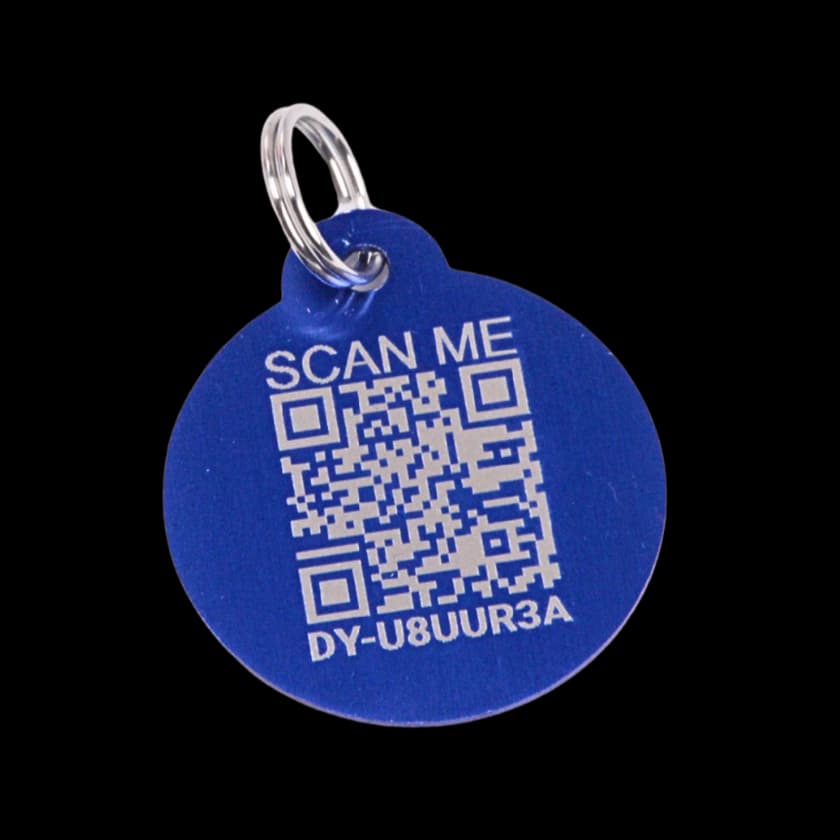
An activated Driyu tag provides a public recovery-contact route if your dog becomes separated and a finder has a connection. Check the visible phone and backup contacts ahead of time. Driyu does not monitor body temperature, detect heatstroke or dispatch emergency care.
Sources and further reading
- American Veterinary Medical Association — Hot weather and your pet. Veterinary-side guidance on heat risk and heatstroke. avma.org
- ASPCA — Hot weather safety tips
- Cornell — Summer heat safety for dogs
- RECOVER — Heatstroke first-aid guidance