
Dog bite prevention for families and finders
Any dog can bite, including a familiar pet. Supervision, space and appropriate help matter; a short guide cannot predict or prevent every incident.
THE DRIYU JOURNAL
Emergency & Safety
In this reading
Quick answer: supervise children, avoid approaching unfamiliar dogs and do not disturb a dog that is resting, eating or caring for puppies. If you find a loose dog, observe from a safe distance and ask appropriate local help when handling is unsafe. Reaching a tag is never worth a bite.
A note about veterinary care
This article is for organization and general education only. It is not veterinary advice, diagnosis, or treatment. Always ask your veterinarian about your pet's health, medications, vaccinations, weight, symptoms, or care plan.
Who bites and why
Familiarity does not remove risk. Pain, fear and the situation can affect behavior. Assess the individual and seek veterinary or qualified behavior advice for concerning changes.
Use prevention measures without assuming you will always see a warning first.
Teaching children to greet dogs safely
- Always ask the dog’s person first.
- Do not approach an unfamiliar dog just to practice a greeting.
- Do not extend a hand toward the face or reach for a collar.
- Let the dog choose to engage. If it turns away, the answer is no.
- No hugging, kissing, leaning over, or grabbing the collar.
- No disturbing a dog that is eating, sleeping, or chewing.
Body language adults miss
Turning away, stiffness, freezing, growling or other changes can indicate a need for space. They do not follow a reliable warning sequence, and the absence of a signal you recognize does not make contact safe.
Consider the whole animal and situation. A wagging tail or a relaxed-looking moment does not guarantee that touching is safe.
For finders of a loose pet
Keep distance, avoid chasing or cornering and contact the owner if their details are safely available. Do not kneel close to an unfamiliar dog or use food as a universal way to attempt capture.
If you cannot read the tag without approaching or handling an uncertain dog, stop and contact local animal services or another appropriate trained responder.
Household rules that prevent bites
Supervise young children around every dog and use suitable separation when needed. Do not force a distressed dog into a crate or punish warning behavior. Ask a qualified professional for a plan when guarding, fear or bites are involved.
How Driyu fits
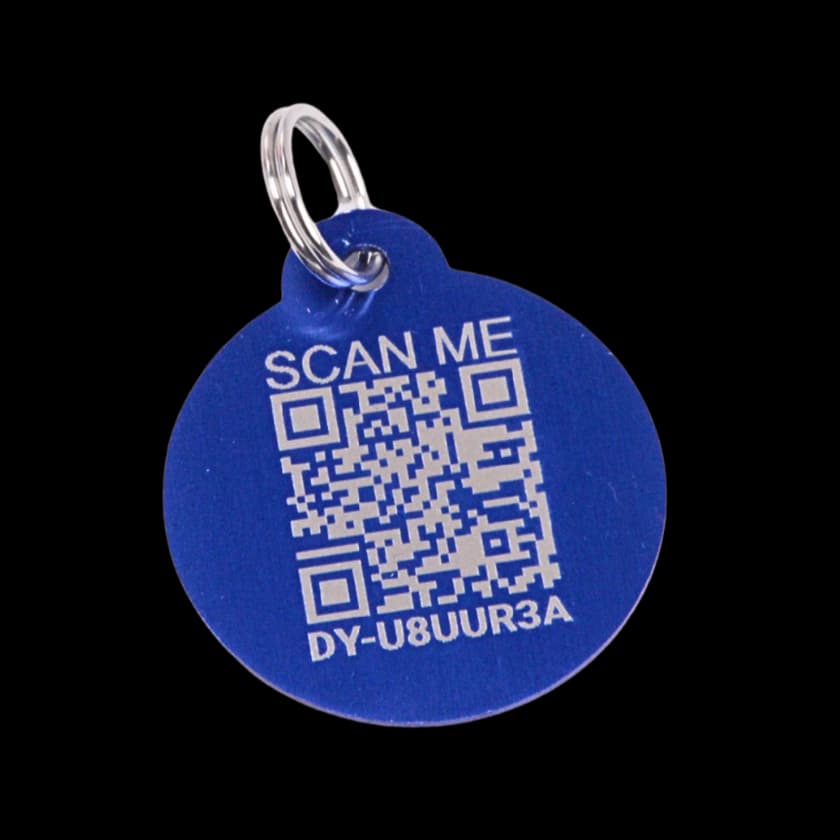
Public temperament and behavior notes may help a finder who can safely open the page. Lost Mode instructions appear when the pet or tag is marked lost. Driyu has five account-level contact visibility controls, not a switch for every field. There is no street-address field on the scan page, but notes or photos can expose private details.
Related reads from Driyu
- Dog body language for finders and family members
- Finder etiquette: what to do (and not do) when you pick up a lost pet
- Writing finder instructions on your pet profile: 6 lines that matter
Sources and further reading
- AVMA — Dog bite prevention · PDF
- CDC — dogs and bite prevention
- American Academy of Pediatrics — Children and dogs
- Fear Free Pets
Frequently asked questions
What is whale eye?
Visible whites at the side of the eye may be one observation to discuss in context. Do not use this single sign to predict a bite or decide that a dog without it is safe to touch.
Are some breeds more likely to bite?
Do not use breed to decide whether a dog is safe to approach. Assess individual circumstances and give unfamiliar dogs space.
What if my child is afraid of dogs?
Do not force interaction. Let the child observe calm, supervised encounters with patient adult dogs from a distance. Comfort grows from successful low-pressure exposure, not from forcing greetings.
Should I ever punish a growl?
Do not punish it. Give the dog space and seek help with the underlying situation; a growl is not an invitation to test the animal further.