
Finder etiquette: what to do (and not do) when you pick up a lost pet
A person who finds a lost pet can help by reporting a safe, accurate sighting and contacting the appropriate people. This guide focuses on helping without putting yourself or the animal at risk.
THE DRIYU JOURNAL
Lost Pet Recovery
In this reading
Quick answer: Keep your distance, do not chase, and stay out of traffic. From a safe place, note the location and time and take a photo if possible. Read a visible tag only without grabbing or cornering the animal. If safe contact is not possible, call local animal services or a shelter for help.
A note about lost-pet recovery
No tool can guarantee a lost pet will be found. Driyu can help organize information and make contact easier when someone scans or reports a found pet, but recovery also depends on the situation, the finder, local shelters, microchip registration, and your search actions.
A frightened or injured pet can behave unpredictably. You do not need to catch the animal to provide useful help.
Step 1: Stop and observe
Do not run toward the animal, reach for it, or corner it. A wagging tail or an approach does not guarantee that touching is safe. Keep children and other animals away.
Avoid staring, sudden movement, and lowering your face near the pet. Give it space; there is no fixed waiting time that makes handling safe. See the owner’s first-hour checklist.
Step 2: Take one photo, note one location
Once you are safe, take a photo from a distance if possible. Record the sighting location and time without entering traffic or private property.
Even if the pet runs away in the next minute, that photo and location are valuable. They give an owner searching the neighborhood a starting point. They give a shelter a starting point. They give the next person who finds the pet a reference. A sighting with a photo and a location is one of the most useful things a finder can produce, even without successful contact.
Step 3: Check the collar — calmly
Only read or scan a tag if you can do so safely without reaching for the animal’s neck. Otherwise ask trained animal services for help.
- An engraved tag may show a phone number. Call it and leave a clear message with your callback details and the sighting location.
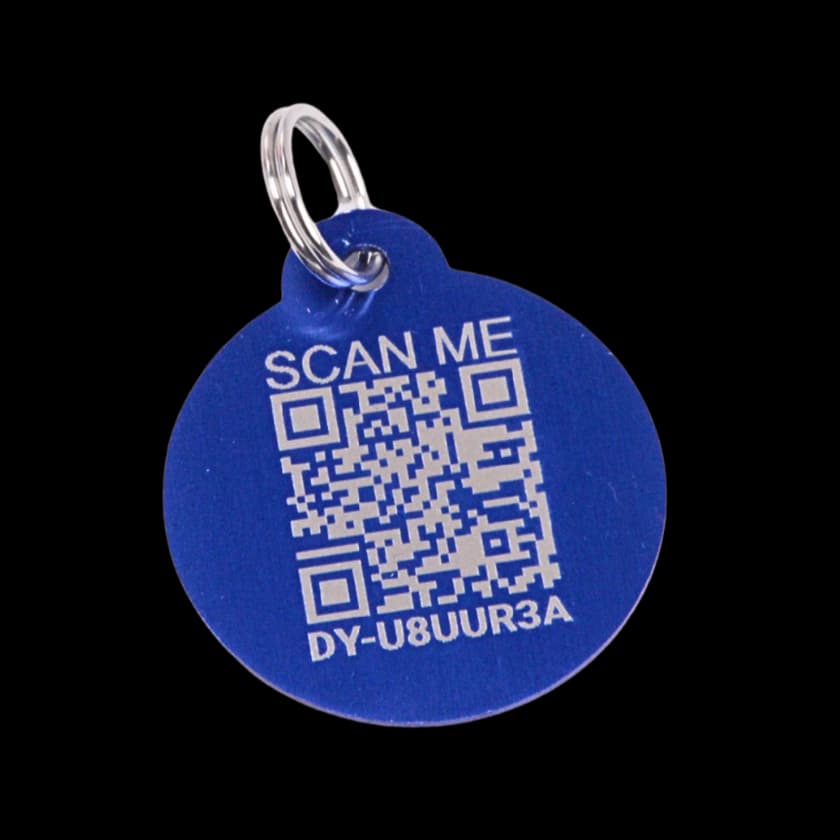
- A QR tag can be scanned with your phone camera — it will open a page with the owner’s preferred contact options and any care notes they have chosen to share. For the owner’s view of that page, see what happens when someone scans your pet’s QR tag.
- A rabies tag often has a number that ties back to the issuing vet clinic. Call the clinic during business hours.
- A vet or shelter can check for a microchip. Call first to arrange safe handling and scanning.
Step 4: Decide whether to move the pet
Moving the pet is not always the right call. Consider:
- Immediate danger or injury. Stay out of traffic and call the relevant emergency or animal-response service. Move an injured animal only when safe and with professional guidance.
- Are they willing? A pet who will not approach is not a pet you should drag. A photo, a sighting, and a call to a shelter is sometimes the right help.
- Safe transport. Do not put an unfamiliar animal loose in a vehicle or attempt restraint beyond your experience. Ask animal services for help and use appropriate secure transport if advised.
Step 5: If you take the pet home
If the pet is calm and willing and you have somewhere safe to put them:
- Use a quiet, escape-proof space away from children and resident pets, after removing chemicals, cords, and other hazards. Follow local found-animal instructions.
- For an alert animal able to swallow normally, make water available without forcing it. Ask a vet or shelter about food and care; an injured or unwell animal may need urgent assessment.
- Take a clear photo in good light if you did not get one outside.
- Post a clear found-pet notice with a photo, general location, and contact route. Keep a distinguishing detail for ownership checks. See flyers and social posts.
- Call a local vet clinic or shelter to scan for a microchip if no tag worked.
- Call your local non-emergency line or animal control to log a found-pet report. This is where many owners look.
What well-meaning finders sometimes get wrong
All of these come from kindness. All of them backfire often enough to mention:
- Chasing. A frightened pet runs into traffic. Take a photo, note the location, and call a shelter instead.
- Giving food, water, or medicine by force. Ask for care guidance and never give medication without veterinary direction.
- Keeping the pet without reporting it. Follow local reporting, holding, and ownership-verification requirements before considering any adoption.
- Cropping the photo so the collar is not visible. A finder photo should show the collar — that is how the owner recognizes their pet on a group post.
- Posting the home address publicly. Use a cross-street or block, not your front door. Direct messages handle the precise location.
- Taking the pet to a facility without checking jurisdiction or intake. Call the local animal service first and tell it exactly where the pet was found.
Quiet handoffs are good handoffs
Verify ownership using photos, records, or details not included in your public post. Arrange a safe handoff; a shelter or animal service can help if ownership is disputed. See care after a pet returns home.
Where Driyu fits, honestly
An activated Driyu tag opens a public page with an internet connection, without a finder account. Use the visible contacts; merely opening the page does not notify the owner. Reporting tools and recovery instructions appear when the pet or tag is marked lost. If a tag cannot be read, local animal services and a microchip scan remain important options.