Digital pet passport6 min read

What happens when someone scans your pet’s QR tag?

What a finder actually sees when they scan a Driyu QR pet tag — and the owner controls behind that page.

D

The Driyu team

Pet safety editorial

A close-up of a hand holding a smartphone near a friendly dog's collar tag, in warm late-afternoon light.

When someone finds your pet and scans the Driyu tag, a web page opens showing the contact information you have chosen to share — name, photo, phone, email, city, state, and emergency contacts if you have enabled each one. They can call you with one tap or submit a found-pet report. You’re notified when a report is submitted.

Demystifying the scan is one of the most useful pieces of trust-building content for a pet platform. This guide walks through exactly what a finder sees, what gets notified, and what stays private.

Step 1 — The finder scans the QR code

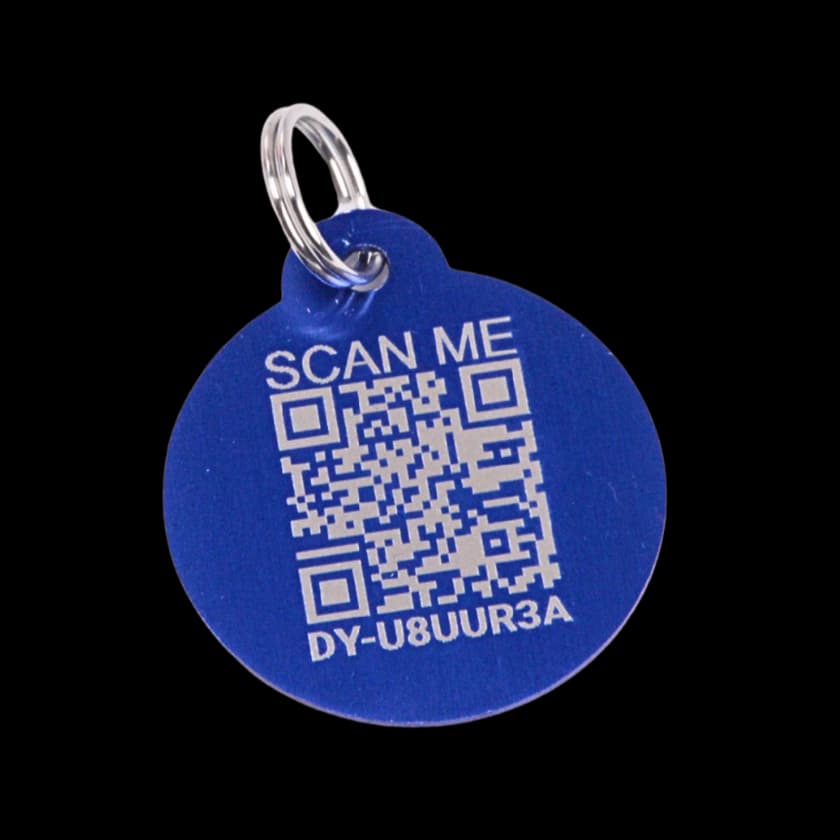
A modern phone camera reads QR codes natively — no special app required. The finder points their camera at the small QR code on your pet’s tag, and their phone offers to open a link. Tapping the link opens the public scan page in their browser. The tag itself doesn’t connect to anything — it’s a printed pattern. Only the finder’s phone needs internet to load the page.

Step 2 — The page shows what you have chosen to share

The Driyu scan page is built around owner control. By default, it shows your pet’s name and a photo so the finder can confirm they have the right pet. Beyond that, you decide what appears publicly through your privacy settings:

  • Phone number — toggleable.
  • Email — toggleable.
  • City — toggleable.
  • State — toggleable.
  • Emergency contacts — toggleable (one master switch for the whole emergency contact list).
  • Medical alerts — enabled per alert, so you decide individually which alerts appear on the scan page.
  • Microchip number, distinguishing marks, breed — appear when you have entered them; these are visible-if-present.

A finder who scans the tag does not see your home address or live location. They see the small set of information you have decided would help them get your pet home.

Step 3 — The finder can call or report

From the page, the finder has two easy paths. If you have published a phone number, they can tap to call you directly. If they prefer not to call (or if you don’t answer), they can submit a found-pet report through the form on the page. The form asks for a short message and (optionally) their contact information. When they submit the form, you receive a notification.

When am I notified?

The most common owner question. The current behavior:

  • A bare scan of the page, on its own, does not trigger a notification. Many pages get scanned by curious onlookers, owners checking their own tag, or someone who decides not to act. We don’t want every scan to be a false alarm.
  • A submitted found-pet report does trigger a notification. This is the standard path: someone took the time to fill in even a brief note, so you should know.
  • A narrower secondary path: when your pet is in Lost Mode and the finder is prompted to share their location but declines, there’s a separate alert so you know engagement happened, even without a full report.

What stays private

Your home address never appears on the public scan page. Your full medical history doesn’t either — only the brief alerts you’ve enabled. Your private notes, sitter handoff information, and detailed records stay in your own account, not on the scan page. Driyu’s Privacy Policy describes how account data is handled and what is shared with whom.

How to review what your scan page shows

A quick review every few months is a healthy habit. Sign in to your Driyu account, open your pet’s profile, and look at the privacy controls. Update toggles as your situation changes — new phone number, new emergency contact, different comfort level with public city/state. The changes are live the next time someone scans the tag.

How a Driyu tag fits in

A Driyu tag is the visible, phone-ready layer of a layered identification system. It does not replace a microchip — chips are the durable system-of-record at vets and shelters. It works alongside the microchip to give a friendly finder a way to reach you fast, with the information you have chosen to share. No tool can guarantee a lost pet will be found, but a current, visible tag with a working phone number is one of the most reliable starting points. If you don’t have one yet, you can get a Driyu tag here.

A short FAQ

Does scanning the tag share my location with the finder? No. The scan opens a public profile page; it does not share your home address or live GPS location. You decide whether your general city and state appear publicly.

Does the finder need to download an app? No app required. The QR code opens a web page in the finder’s browser.

When am I notified that my pet has been seen? You’re notified when a finder submits a found-pet report. There’s also a narrower alert path when your pet is in Lost Mode and the finder declines a location prompt. A bare scan does not, on its own, trigger an owner notification.

Can a stranger keep scanning the tag to learn things about me? The page shows the same set of information you have chosen to share publicly. Multiple scans do not reveal more.

Does my pet need to be online or wear a smart device? No. The QR tag is a printed code. It doesn’t have a battery and doesn’t connect to anything.

The point of a QR pet tag isn’t to share more information — it’s to share the right information, with the right person, at the right moment. Owner control is what makes that work.

Sources and further reading

  • Driyu Privacy Policy. Driyu’s current data and privacy policy. driyu.com/privacy
  • Driyu Recovery Privacy. How recovery-flow data is handled. driyu.com/recovery-privacy
  • American Veterinary Medical Association — Microchipping FAQ. Reference on pet identification. avma.org

Read next

A flat-lay on warm cream linen of a leather pet collar with two tags side by side (one QR-style metal tag and one engraved-blank metal disc), a folded paper registration form, and a smartphone.

Digital pet passportMay 16, 20267 min read

How Driyu works with your microchip registry (not as a replacement)

How Driyu’s QR pet tag and pet profile pair with a microchip registry instead of replacing it — what each tool does and why both matter.

DriyuRead guide
A flat-lay on warm cream linen of a smartphone face-up showing a calm minimal pet profile screen with six abstract sections, a small leather pet collar with a blank tag, a folded paper notepad, and a pen.

Digital pet passportMay 16, 20267 min read

Anatomy of a complete Driyu pet profile: six sections that matter

A field-by-field walk-through of the six sections that make a Driyu pet profile complete — what each one does for a finder, a sitter, or a vet.

DriyuRead guide
A close-up of a hand holding a smartphone near a calm dog’s collar tag in a warm sunlit doorway, with a person in the soft-focus background.

Digital pet passportMay 16, 20265 min read

Accidental scans of a Driyu tag: what actually happens?

A short, plain-language answer to: what if someone accidentally scans my pet’s QR tag when nothing is wrong?

DriyuRead guide
A flat-lay on warm cream linen of a folded paper checklist, a smartphone face-down, a small leather pet collar with a blank QR-style tag, a pen, and a small ceramic mug.

Digital pet passportMay 16, 20266 min read

Driyu pet profile pre-publish checklist for owners

A short, ordered pre-launch checklist for the Driyu pet profile — the small audits to run before treating the QR tag as the active reunion path.

DriyuRead guide
A flat-lay on warm cream linen of a smartphone with a notifications inbox screen, a leather pet collar, a folded paper notepad, and a small ceramic mug.

Digital pet passportMay 16, 20266 min read

When Driyu notifies the owner — and when it does not

A clear answer to the most common Driyu question: which events trigger an owner notification, and which do not?

DriyuRead guide
A smartphone resting on a warm wooden table showing a candid photo of a happy brown dog as wallpaper, beside a small leather collar with a blank metal ID tag.

Digital pet passportMay 10, 20267 min read

How a digital pet profile works (and why it matters for recovery)

A plain-language explainer of what a digital pet profile is, what it stores, what finders can see, and how it helps when your pet is missing.

DriyuRead guide