
Dog body language for finders and family members
A dog’s posture can offer clues about discomfort, but no single signal tells you it is safe to approach. Give unfamiliar dogs space and get help when needed.
THE DRIYU JOURNAL
Lost Pet Recovery
In this reading
Quick answer: Look at the whole animal and situation. Tension, freezing, avoidance or a hard stare call for more distance. A wagging tail or apparently relaxed posture does not guarantee safety; do not reach for an unfamiliar dog or put your face close to it.
A note about lost-pet recovery
No tool can guarantee a lost pet will be found. Driyu can help organize information and make contact easier when someone scans or reports a found pet, but recovery also depends on the situation, the finder, local shelters, microchip registration, and your search actions.
Well-meant attempts to grab or crowd a loose dog can make the situation more dangerous. Observe from safety, keep others back and call local animal services when help is needed.
The relaxed dog
A dog may appear more relaxed with these features, but none is proof that handling is safe:
- Body loose; weight evenly on all four legs or comfortable lying down.
- Eyes soft, blinking normally; no hard stare.
- Ears in their natural position — not pinned back, not pricked-forward-and-frozen.
- Mouth slightly open or a soft “smile”; tongue may hang loosely.
- Tail movement interpreted in the context of the whole body; tail position and shape vary between dogs.
- Approaches you in a curve, not a straight line.
The scared dog
Possible signs of fear or discomfort include:
- Body crouched or tense; weight shifted backward.
- Ears pinned flat to the head.
- Lips tight; mouth closed or pulled back in a “commissure pull.”
- Whale eye — whites of the eyes visible from the side.
- Tail tucked under or held low and stiff.
- Avoiding eye contact, turning the head away, slow lip licks, repeated yawning.
- Trembling.
Give the dog space and avoid staring, chasing or cornering it. Do not move close or crouch within reach. From a safe location, note the time and place and contact local animal services; photograph only if safe.
The over-aroused dog
Signs of high arousal or tension can include:
- Body forward and tense.
- Ears pricked forward and frozen, not soft.
- Hard stare without blinking.
- Tail high and stiff, with a fast tight wag or no wag at all.
- Mouth closed; possible piloerection (raised hair along the back).
An over-aroused dog needs more space, calmer surroundings, and time, not approach. Treat them like a scared dog and call for help.
Subtle signs to notice
Lip licking, turning away, sniffing, yawning or shaking can have several meanings. Consider the context and give the dog a break rather than treating any gesture as a reliable prediction.
- Slow lip licks.
- Slowly turning the head or whole body away.
- Sniffing the ground for no clear reason.
- Yawning when not tired.
- Shaking off as if wet.
What to write on your pet profile
A short line in your public pet profile can change how a finder approaches your dog in the first minute:
- “Fearful of strangers — please give space and call with the location. Do not chase.”
- “May chase other animals — keep your pets away and seek help with safe containment.”
- “Easily scared by loud voices — speak softly.”
- “Friendly with people, nervous with other dogs.”
These are brief handling cautions, not a substitute for safe judgment or professional help. Review what is visible on the public page.
Family and visitor habits
Supervise children around dogs closely and separate them when an adult cannot actively supervise. Teach children not to hug, climb on, disturb or put their face near a dog. A timed petting rule cannot prevent every bite; if the dog moves away or seems uncomfortable, stop and give space.
How Driyu can help
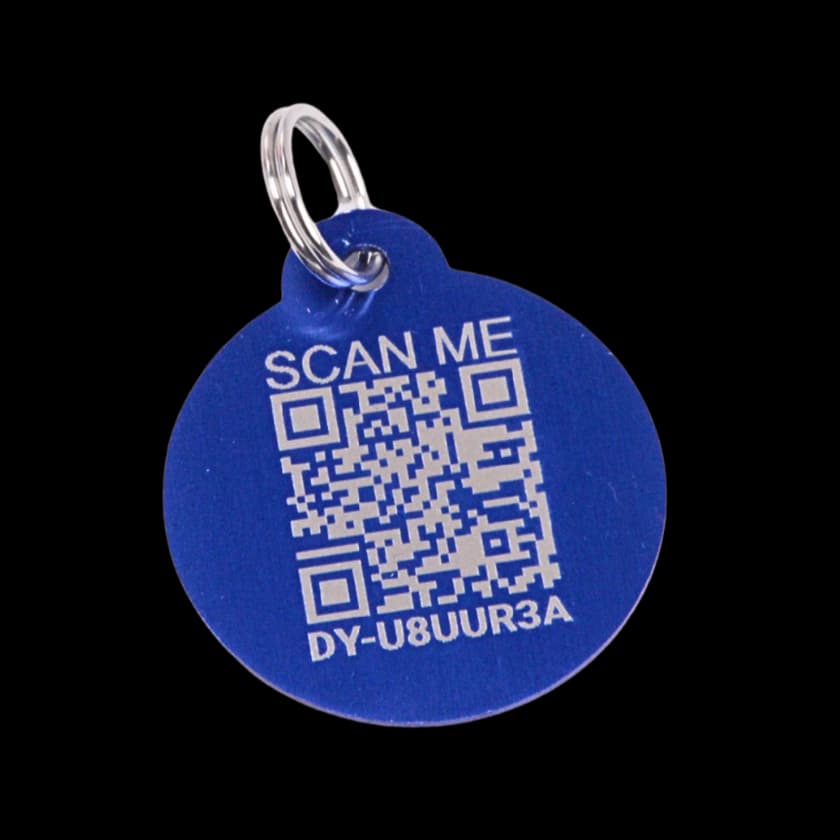
Driyu’s public tag page can display temperament and behavior notes. Additional lost instructions appear when the pet or tag is marked lost. Write concise cautions, check the actual public page and keep private household details out of those notes. A note cannot guarantee how an unfamiliar person or frightened animal will respond.
Sources and further reading
- CDC — Dog safety and bite prevention
- ASPCA — Understanding dog body language. Plain-language guide to reading canine signals. aspca.org
- Fear Free — Educational resources. Veterinary-led resources on low-stress handling and body-language awareness. fearfree.com
- IAABC — Resources for owners. Behavior-consultant materials on reading dog signals. iaabc.org