
What to do when you find a lost pet
A calm, step-by-step guide for anyone who finds a lost dog or cat — from checking for tags to reporting to local shelters safely.
THE DRIYU JOURNAL
Lost Pet Recovery
In this reading
Keep people safe first. Observe from a distance, report the location to local animal services, and check identification only if handling is safe. A clinic or shelter can advise on a microchip scan and temporary care. Report a found animal promptly; do not assume it is abandoned or that a reunion is guaranteed.
You spot a dog trotting alone down the street, or a cat sitting under a parked car looking confused. Most people freeze for a second. Then a kinder instinct kicks in — someone is missing this pet right now. The good news: you can help, and the steps are simpler than they feel in the moment. This guide walks through what to do calmly, in order, whether the pet has a tag or not.
Before you approach: a quick safety check
A lost pet is usually scared. Even a friendly dog or cat may behave unpredictably when separated from their family.
- Move slowly. Lower your voice. Avoid direct eye contact at first.
- Keep your face and hands away from the animal’s mouth. Do not kneel beside, corner, grab, or restrain an unfamiliar animal.
- Give the animal space. Calm appearance or a wagging tail does not prove it is safe to touch; ask trained responders for help when uncertain.
- Don’t chase a pet that runs. Chasing usually pushes them further away.
- If injured, unresponsive, in traffic, or unsafe to handle, contact animal services and an emergency vet for urgent guidance. Use emergency services for immediate danger to people.
Keep children and your own animals well away. Do not send a child to read the collar.
Step 1 — Look for ID
Read a tag only when it is safe to do so; do not reach for the neck of a frightened or unfamiliar animal.
- A readable phone number offers a contact route. Call and leave a clear message if there is no answer.
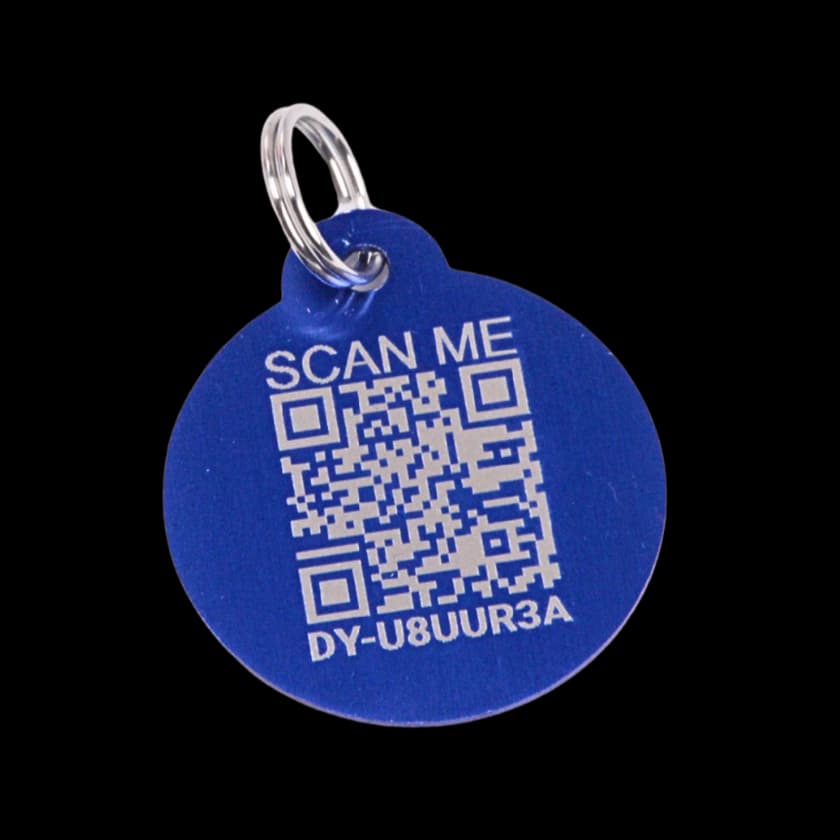
- A QR code can open a linked page using a compatible camera, browser, and internet connection. Review the available contacts.
- A rabies tag with a number. That number can sometimes be looked up by the issuing veterinary clinic — useful if there’s no other ID.
- No tag at all. That doesn’t mean no ID. Many pets have a microchip, which can only be read with a special scanner. We’ll get to that.
A linked Driyu tag opens public pet details and available contacts. A call link requires a visible phone. The report form appears when the pet or tag is marked lost; an accepted report starts notification attempts without guaranteeing delivery. Opening the page alone does not alert the owner.
Step 2 — Contain the pet safely (if you can)
If the pet is comfortable with you, try to bring them somewhere secure while you work on reuniting them.
- Use suitable equipment only if you can handle the animal safely. Do not improvise a tight neck loop with a belt or shoelace; ask animal services for help.
- For a cat, ask for a secure, ventilated carrier and safe handling assistance. Keep a contained animal separate from children and resident pets; a parked car is not safe holding accommodation.
- If alert and swallowing normally, make water available without forcing it. Ask a vet before feeding an injured or unwell animal.
- Record the exact found location and time. Follow local services’ instructions for safe transport or care; urgent safety takes priority over staying at that spot.
If you can’t safely contain the pet, that’s still OK. Note their location and the direction they were heading — that information is valuable to anyone searching. You can also ask a nearby business or neighbor to keep an eye out.
Step 3 — If there’s no tag (or no answer)
If no contact route works, continue with identification and official reporting:
- Call a nearby clinic or shelter to confirm microchip-scanning availability and safe transport instructions. Cost and access vary. Reading the number and finding current registry contacts are separate steps.
- Share a clear photo, general found area and time, and a contact route in local groups. Withhold a distinguishing detail to help check ownership; never send verification codes or money to a claimant.
- File a found-pet report with local animal services promptly, even while trying the tag’s contacts.
- Check the area where you found the pet for “lost pet” flyers — sometimes the family is searching nearby and you’re closer to a reunion than you realize.
Step 4 — Decide on temporary care
If the owner doesn’t surface immediately, the pet still needs a safe place while the search continues.
- Ask the responsible local service about intake, available space, identification checks, and applicable holding rules. Do not assume a universal holding period.
- If temporary home care is permitted and safe, register the found animal and follow local instructions. Keep it separate from resident animals.
- Don’t keep a found pet long-term without reporting them. Even with the best intentions, this can prevent the original family from finding their pet.
Follow local reporting and ownership-verification procedures. A person knowing publicly posted details does not by itself prove they are the owner.
How a Driyu tag fits into this moment
Use the visible contacts on the linked page. With Lost Mode active, you may submit a report with your observations and location. State clearly whether you have the animal or only saw it.
A report is not verified ownership, proof of possession, or a promise that the owner received it. Keep working with local services when a response is absent.
A short FAQ
What if the pet is injured? Call an emergency vet or animal services for handling and transport advice. Do not risk a bite or delay urgent care to search for a tag.
What if the pet seems aggressive or fearful? Call animal control. Trained handlers can contain the pet safely. Don’t put yourself or the pet at risk by trying to handle a frightened animal alone.
What about night or severe weather? Contact the local after-hours service or emergency clinic. Protect yourself and seek safe, temperature-appropriate shelter for the animal if you can do so without risky handling.
What if I cannot keep it? Ask the responsible local animal service about safe options. Rescue availability and shelter intake differ by area.
What if the tag has a number but no one answers? Try again in a few minutes — the owner may already be out searching. Leave a clear voicemail. Then move on to the shelter scan and online posts; both can run in parallel.
Useful help can be a safe observation, a precise location, a contact attempt, or an official report. You do not need to handle an animal to help its family.
If your own pet wanders someday, those same systems are there for you. A tag, a microchip, and a current contact number make all of them work better.
Sources and further reading
- ASPCA — Finding a Lost Pet. Pet welfare organization with general guidance for both owners and finders. aspca.org
- Humane World for Animals (formerly Humane Society of the United States). General guidance on reporting and reuniting found pets. humaneworld.org
- American Veterinary Medical Association — Microchipping of Animals FAQ. Veterinary professional body with reference material on pet identification and lost-pet recovery. AVMA — Microchipping your pet · PDF