
What information should your pet's tag and profile include?
A simple guide to what goes on a pet ID tag, what a digital profile should include, and how to make it easy for a finder to reach you.
THE DRIYU JOURNAL
Pet ID & QR Tags
In this reading
Start with a current way to reach you. A digital profile can add a photo, identifying details and recovery context. Review what is public, and correct contact information when it changes.
Most pet owners eventually face a small moment of decision: standing in a pet store with a blank ID tag in hand, or staring at the empty fields of a pet profile, wondering exactly what to write. The instinct is usually to include as much as possible — every phone number, the home address, vet info, medical notes. But more isn’t always better. The right information helps a finder reach you fast; the wrong information can compromise your privacy without making recovery any faster.
The physical tag: less is more
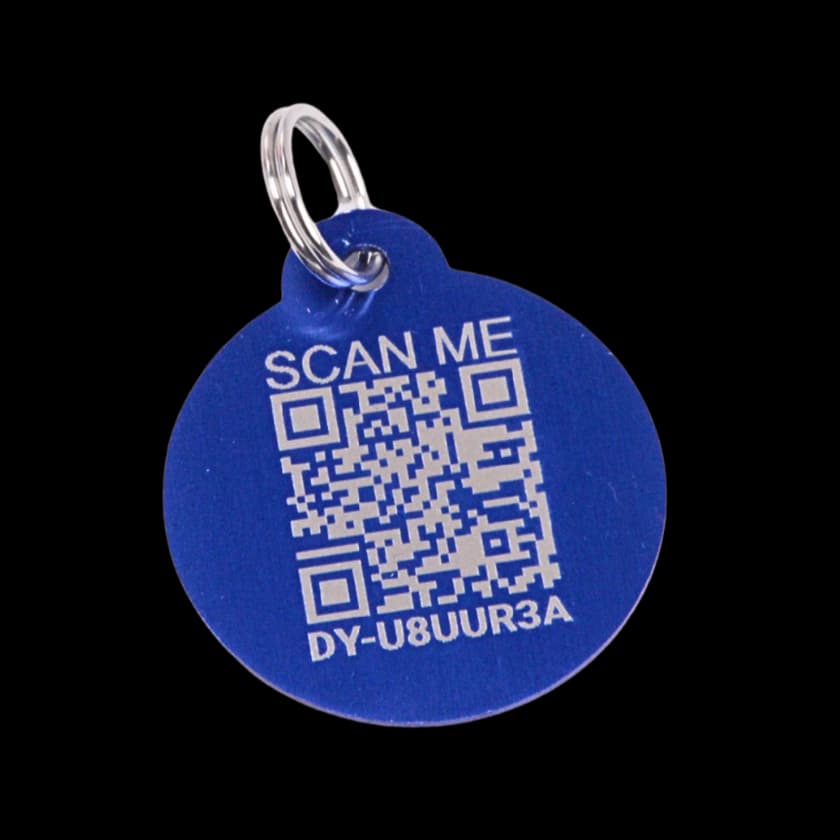
Space on an engraved tag is limited. Prioritize a legible contact route; these are practical considerations, not a guarantee of recovery:
- Pet name. A short identifying detail, alongside a way to reach you.
- A current phone number. Ideally a mobile number you carry with you. A landline tied to your home is less useful when you’re out searching.
- A second contact, if useful and space allows. Ask that person before sharing their number.
- Brief recovery context. Keep detailed medical records separate from visible identification.
Check that the number is legible and answered by the intended person. Extra information cannot compensate for an outdated contact.
What not to put on a physical tag
- Your home address. An engraved address is readable by anyone who sees the tag. Consider that exposure before adding it.
- Your daily schedule. Some owners are tempted to engrave “Walked daily 7 a.m. and 6 p.m.” That’s information you don’t want broadcast to the world.
- A chip number in place of contact information. It does not itself give a finder a phone number. Keep the number with your records and review whether you want it on the public page.
The digital profile: more space, more responsibility
A digital page gives you more space and lets you update saved information. That space is still public: include recovery details deliberately, rather than copying a full private record.
A useful digital profile typically includes:
- Pet name, breed and a current photo. Useful context for comparing a sighting with your description.
- Distinguishing marks. Describe visible features accurately. A description is not proof of ownership.
- An available phone or email. Review whether the chosen contact actually appears on the public page. Do not assume there is anonymous chat.
- Emergency contacts, if you choose to share them. Confirm the details and get each person’s permission.
- Microchip number. In Driyu it appears publicly when the pet is marked as microchipped and a number is saved; this does not verify or update the registry.
- Brief recovery alerts. Keep them factual and appropriate for a public finder. They do not replace the full medical record or veterinary judgment.
What a digital profile should NOT include
The same privacy logic that applies to a physical tag applies — with more nuance — to a digital profile.
- Exact home address. Do not place it in public notes or photos. Driyu shows city and state together only when both are shared and saved, inside an owner card that requires a visible phone or email.
- Live location claims. Driyu is not GPS tracking. Location a finder chooses to provide with a report is different from continuous tracking.
- Full medical history. Keep private care records separate from the public recovery page.
- Family member names without permission. If you list someone as an emergency contact, ask them first.
- Children’s names or schools. This sometimes shows up in pet profile bios. There’s no reason to include it.
Owner control matters
The most important feature of any digital pet profile isn’t what you can include — it’s what you can change.
Review the public page when phone numbers, contacts or pet details change. In Driyu, the five sharing settings belong to the account, not a separate set of switches for each pet.
How a Driyu profile is set up
Driyu displays the pet’s identity, saved marks and behavior notes, available contacts, and the owner’s saved name. The chip number appears when the pet is marked microchipped and a number is saved. Active medical alerts enabled for scans may appear; older allergy text is a fallback when no qualifying alert is present.
The five account settings control phone, email, city, state and emergency contacts. They do not hide every pet field. The report form and saved finder instructions appear when the pet or tag is marked lost. Anyone with the public link can open the page; check it after saving changes.
Driyu does not verify medical records or vouch for accuracy — the profile is the information you choose to share. The platform is designed to help organize and surface that information cleanly when someone needs to reach you.
A short FAQ
Should I put my home address in public notes? Keep an exact home address out of notes and photos you intend to share publicly. The Driyu owner card uses city and state, not a full street address.
What if my pet has several medical conditions? Keep the full care record separate. Ask your veterinarian which brief recovery information is appropriate to share; public alerts are not treatment instructions.
Should I include a photo? Yes. A current, clear photo is one of the most useful pieces of information on any pet profile.
What if I move? Correct your saved contacts and review the public page. A working tag linked to the same pet can keep its link. Update printed details and the microchip registry separately.
What does showing my phone number mean? A visible number is public. Driyu’s call link is not an anonymous relay. Choose a reachable contact route with that visibility in mind.
A pet’s tag and profile are working in your favor for one specific moment: when someone needs to get your pet home. Keep the information focused on that moment. Include what helps the finder act; leave out what doesn’t.
Keep a clear photo and current contacts, and check the actual public page. Identification supports recovery efforts without replacing other care or guaranteeing an outcome.
Sources and further reading
- ASPCA — General Pet Care and Identification Resources. Pet welfare organization with general pet ID and tag guidance. aspca.org
- Humane World for Animals (formerly Humane Society of the United States). General guidance on pet identification. humaneworld.org
- American Veterinary Medical Association — Pet Identification Resources. Veterinary professional body with reference material on pet identification. avma.org