
Dog collar vs. harness: where should the ID tag live?
A small decision with a big consequence: when a dog slips out a door or escapes a yard, the ID has to already be on them. That fact decides where the tag lives.
THE DRIYU JOURNAL
Pet ID & QR Tags
In this reading
Quick answer: Choose a safe, well-fitted way for the dog to carry identification, and a suitable harness or collar for walks. Collars and dangling tags can snag in crates or play, so plan for those risks rather than applying an “always on” rule. A registered microchip provides a separate identification route.
A note about veterinary care
This article is for organization and general education only. It is not veterinary advice, diagnosis, or treatment. Always ask your veterinarian about your pet's health, medications, vaccinations, weight, symptoms, or care plan.
A collar can carry visible ID while a harness provides an appropriate leash attachment. The best setup depends on the dog, the activity and the environment; ask your vet or a qualified trainer when unsure.
What a flat collar does well
- Visible identification. A suitable collar can hold a current tag during ordinary activities, subject to fit and snagging precautions.
- Tag visibility. A flat collar puts the tag where a neighbor or finder can see it without lifting any gear off the dog.
- Handling limits. A collar is not an invitation for a stranger to grab a frightened dog; safe distance and professional help may be needed.
What a harness does well
- Spreads leash pressure. A well-fitted harness distributes force across the chest rather than concentrating it on the neck. For dogs that pull, brachycephalic breeds, or dogs with tracheal issues, this matters.
- Leash management. The right harness and training can help with control; design and fit matter and no harness guarantees that a dog cannot escape.
- Car travel. Use a suitable, independently tested vehicle restraint or carrier, installed as instructed. An ordinary walking harness is not automatically a car restraint.
If identification is attached only to removable equipment, decide how identification will be available at other times without creating an entanglement hazard.
Plan for the activity
Check each part of the setup:
- Visible ID: current and readable, on equipment safe for the situation.
- Walking equipment: correctly fitted, comfortable and suitable for leash use.
- A second tag can add another contact route, but check attachment and snagging risks. Each QR tag must be properly linked to the correct pet.
What goes on the tag
Whether the tag is engraved, QR-style, or both, the contents are similar:
- A phone number you reliably answer.
- (Optional) Your dog’s name — some trainers recommend leaving this off so a stranger cannot call your dog by name, but most owners keep it.
- (Optional) “Microchipped” or your microchip number on a small second tag, which prompts a shelter to scan.
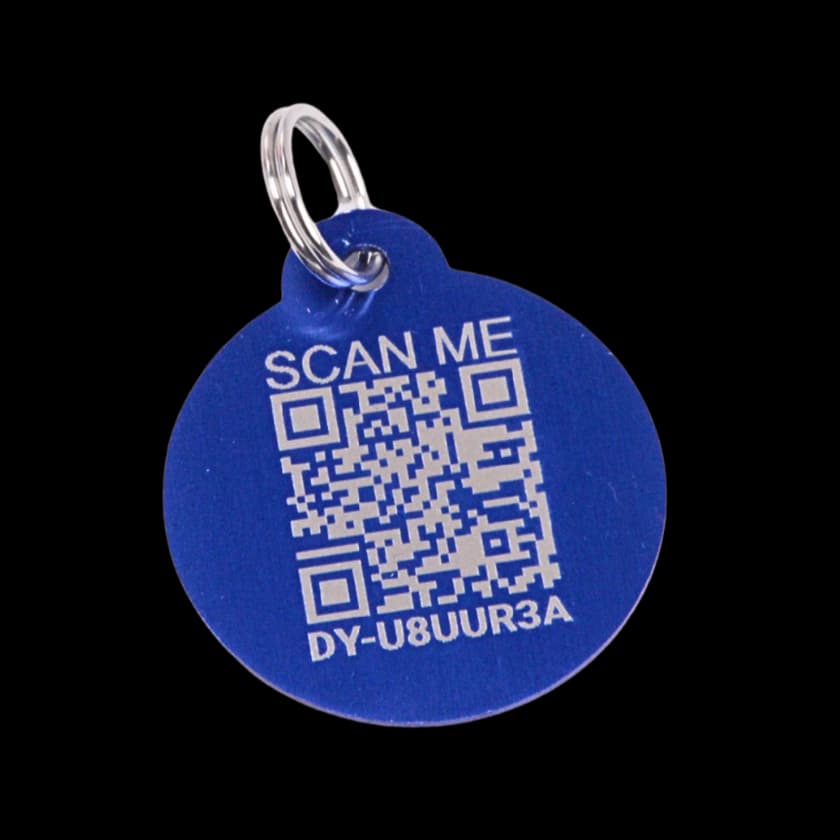
- A QR tag can open a public recovery page with visible contacts and selected information. It does not expose the whole private care record.
For the full comparison of QR vs engraved options, see QR pet tags vs traditional engraved tags.
Fit notes that matter for ID retention
- Follow the manufacturer’s fitting instructions and check for slipping, rubbing or restricted breathing. A finger-width rule alone is not enough for every dog or collar.
- Check fit frequently, especially during growth or changes in weight or coat.
- Inspect buckles, rings and attachment points regularly and replace damaged parts promptly rather than waiting for an annual date.
- Harnesses need fit checks too. A loose harness lets a panicked dog slip the entire rig in seconds; a tight one cuts under the armpit.
Special cases
A few situations deserve different handling:
- Short-nosed breeds or breathing concerns: ask your veterinarian which equipment is appropriate. Do not leave an identification collar loose enough to slip or snag.
- Dogs with tracheal collapse or neck injuries. Speak with your vet. A harness for any leash pressure is usually safer; ID can be on a breakaway tag-only collar that is not used for leash attachment.
- Hiking or trail dogs. A harness with a separate ID patch (Velcro panel) can complement the flat collar tag — redundancy is fine.
- Puppies: introduce suitable equipment gradually with positive experiences and check fit as they grow; comfort is not guaranteed by starting at a particular age.
How Driyu can help
Attach the Driyu tag safely and activate it for the correct pet. Check that its QR opens the current public recovery page. Use it alongside a registered microchip and appropriate visible ID, with precautions for crate use and activities where equipment can snag.
Sources and further reading
- American Veterinary Medical Association — Pet identification guidance. Owner-facing rationale for collars, tags, and microchips as layered ID. avma.org
- AKC — Collar entanglement risks
- AAHA — Lifestyle and safety assessment