
Dog recall training basics — and why ID still matters
Recall is the most useful skill any dog learns, and the one most owners practice unevenly. A calm, positive build over weeks beats a frantic chase across a parking lot. And even a great recall does not replace ID — it works alongside it.
THE DRIYU JOURNAL
Health & Daily Care
In this reading
Quick answer: Build recall with short, positive sessions in low-distraction places before you ever need it. Always reward when the dog comes — even when you are frustrated and they just blew you off. Keep a current ID tag on the collar regardless of how reliable the recall feels, because even the best recall can fail on a deer crossing the trail.
A note about veterinary care
This article is for organization and general education only. It is not veterinary advice, diagnosis, or treatment. Always ask your veterinarian about your pet's health, medications, vaccinations, weight, symptoms, or care plan.
Most owners think recall is a single command. It is really three habits stitched together: making the cue sound good, making the dog’s response easy, and never punishing the moment of return. Every time a dog comes back to you and gets scolded for the wandering, the recall gets a little weaker. This guide is a calm version of how to build the other direction.
Why practising recall helps
Coming when called is a useful safety skill, but it does not make an unfenced area, road or off-leash situation safe. Use secure boundaries and suitable leads, follow local rules and keep identification current.
The cue: pick one word and protect it
Choose a clear cue and practise it in situations where the dog can succeed. If progress stalls, reduce the difficulty and ask a reward-based trainer for help.
- Choose one cue. “Come,” “here,” or a whistle pattern — whichever you can say crisply when you are stressed.
- Stop using it for anything else. Reserve it for the recall. If you say it casually all day around the house, it becomes background noise.
- Say the cue clearly. If the dog does not respond, manage the situation safely and make the next practice easier rather than escalating or shouting.
- Pair it with reward, every single time during training. The cue is a promise. If you keep the promise consistently for the first few months, the dog learns the cue is worth orienting to.
Start where success is cheap
Begin in environments where coming back to you is the most interesting thing happening:
- A quiet hallway at home.
- A fenced yard with no other dogs.
- A suitable long line attached to a well-fitted harness in a safe open area, with guidance on avoiding tangles and sudden stops.
Increase difficulty gradually while keeping the dog safely contained. There is no fixed number of successful sessions that guarantees a response around wildlife.
Reward on every return, especially when you are frustrated
Reward the return and avoid scolding. If the dog was slow or distracted, plan an easier next practice. If it may have eaten something dangerous, contact the vet; training advice must not delay care.
What to use as a reward
Use whatever the dog actually values in that moment:
- Small rewards suitable for the dog’s health and diet. Check ingredients and use veterinarian-approved choices when food is restricted.
- Toy play — a quick game of tug or fetch can be a better reward than food for some dogs.
- Praise plus access — for some dogs, “good!” and the resumption of a sniff is reward enough.
- Choose rewards the dog enjoys and can have safely; variety is optional, not a guarantee of better learning.
Add distance and distraction gradually
Practise distance and distraction gradually while using secure containment or a suitable line. If the dog struggles, reduce difficulty. Fear, discomfort and the environment can affect the response; do not interpret every failure as a reward problem.
Why ID still matters — even with a great recall
Recall is a skill, not a guarantee. A few situations override almost any training:
- Sudden prey drive — deer, rabbits, cats.
- Loud thunder, fireworks, or sudden car horns.
- Unfamiliar terrain with novel smells and no clear path back.
- A dog who slips through a fence gap while no one is watching.
- An accidental door dash during a delivery.
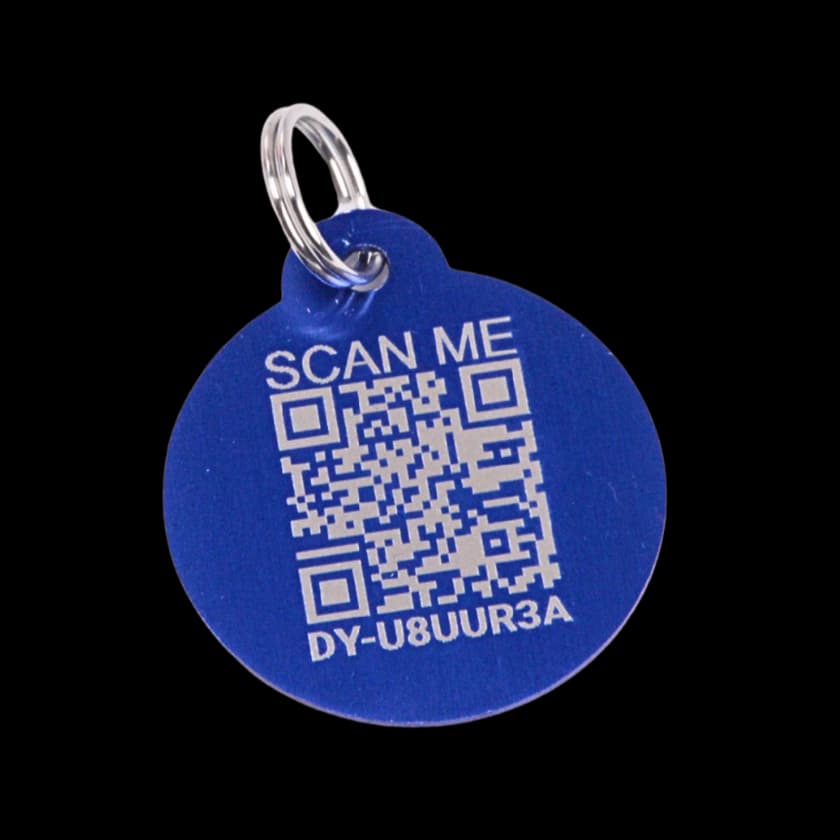
In any of those situations, the dog is briefly out of your reach and into a stranger’s. A current ID tag on the collar — engraved, QR-style, or both — is the thing that closes the loop while the dog is still confused. For the layered framing, see microchip, QR tag, or both? For why a digital tag complements a microchip, see QR pet tags vs traditional engraved tags.
When to call in a professional
Ask the vet about new fear or behavior changes and seek a professional who uses reward-based methods. Check qualifications and methods rather than relying on a directory listing alone. Bring dated examples of when the dog responds and when it struggles.
How Driyu can help
An activated Driyu tag offers a route to the public recovery page when someone scans with a connection. Keep visible contacts current and test the page. Identification supports a recovery effort but does not guarantee a call or reunion.
Sources and further reading
- American Veterinary Medical Association — Pet behavior and training resources. Owner-facing guidance on positive-reinforcement training. avma.org
- AVSAB — Humane dog-training position statements
- International Association of Animal Behavior Consultants (IAABC) — Find a consultant. Credentialed behavior consultant directory. iaabc.org
- CCPDT — Trainer certification and directory