
How to coordinate community support for a lost pet
Neighbors and local organizations can contribute sightings and help circulate clear information. Coordinate their help without encouraging unsafe pursuit or handling.
THE DRIYU JOURNAL
Lost Pet Recovery
In this reading
Quick answer: Share a recent photo, last confirmed sighting, a reachable contact, and a request not to chase. Contact shelters and animal services promptly and adjust the search area to the circumstances; do not limit it to an assumed one-mile radius.
A note about lost-pet recovery
No tool can guarantee a lost pet will be found. Driyu can help organize information and make contact easier when someone scans or reports a found pet, but recovery also depends on the situation, the finder, local shelters, microchip registration, and your search actions.
People nearby may notice something you miss. Ask for specific, safe help and keep a single dated update people can refer to.
Why community search works
A few things stack up at once:
- More observations. Neighbors can report sightings during their ordinary activities without forming a chase group.
- Pattern recognition. A neighbor who has seen your dog walk past their house for a year recognizes that dog faster than a stranger reading a flyer.
- Local knowledge. Ask residents to check their own accessible areas safely, without trespassing or publishing household routines.
- Repeat checks. An animal may stay hidden and appear briefly; recheck safe places and log confirmed sightings.
The three rings of community
Think about your search in concentric rings, not as one big shout:
- Inner ring (the block). Direct neighbors, the house behind yours, anyone whose yard backs into your yard. Knock if it is daytime. Leave a note with a photo and your phone number if it is not.
- Middle ring (the neighborhood). Local Facebook groups, Nextdoor, neighborhood pet pages, dog-park communities, and any group chats where people share neighborhood updates. Post once with a clear photo and a single contact method.
- Organizations. Contact the shelters, animal services, clinics, and registry relevant to the search promptly. Do not assume these are slow or impose a five-mile limit.
What to share in your post
Put the information that helps identify the animal and report a sighting near the beginning. Avoid private details that do not help the search.
Keep the post to:
- One clear, recent photo — ideally less than 12 months old, taken in daylight, showing the whole pet.
- One sentence describing the pet (e.g., “medium-sized brown dog, blue collar, very shy”).
- Last seen: cross-street, time, direction if known.
- One phone number.
- One instruction: “Do not chase. Report the location and a photo if safe.”
For the longer version with flyer templates and platform-by-platform tips, see how to make an effective lost pet flyer and social media post.
The link that travels better than text
Sharing the actual public URL can let others reopen the current page. A screenshot is a static copy, and a cropped or unclickable link may be lost. Check which contacts and notes are visible before sharing Driyu’s public page; Lost Mode instructions and reporting depend on the pet or tag being marked lost. See the digital-profile guide.
What to ask the community to do (and not do)
Some asks help. Others backfire.
Helpful asks:
- “If you see this pet, report the location and take a photo only if safe. Do not chase.”
- “Please check accessible places on your own property safely. Do not crawl into dangerous spaces.”
- “If you have a doorbell camera, please look at footage from the last 4 hours.”
- “Please share once — we will post updates here when we have them.”
Asks that backfire:
- “Please grab them and bring them home.” A frightened pet runs from a stranger reaching for them and may run into traffic.
- “Bring them to our address.” A stranger driving with a loose, frightened pet can cause a second escape.
- Urgent payment or verification-code requests. Check any claim carefully and do not send money or account codes based only on a caller’s story.
Closing the loop
When the pet is safely recovered, update the original posts and contact organizations that received the missing report. Remove flyers where appropriate. See what to do after a pet returns.
How Driyu can help
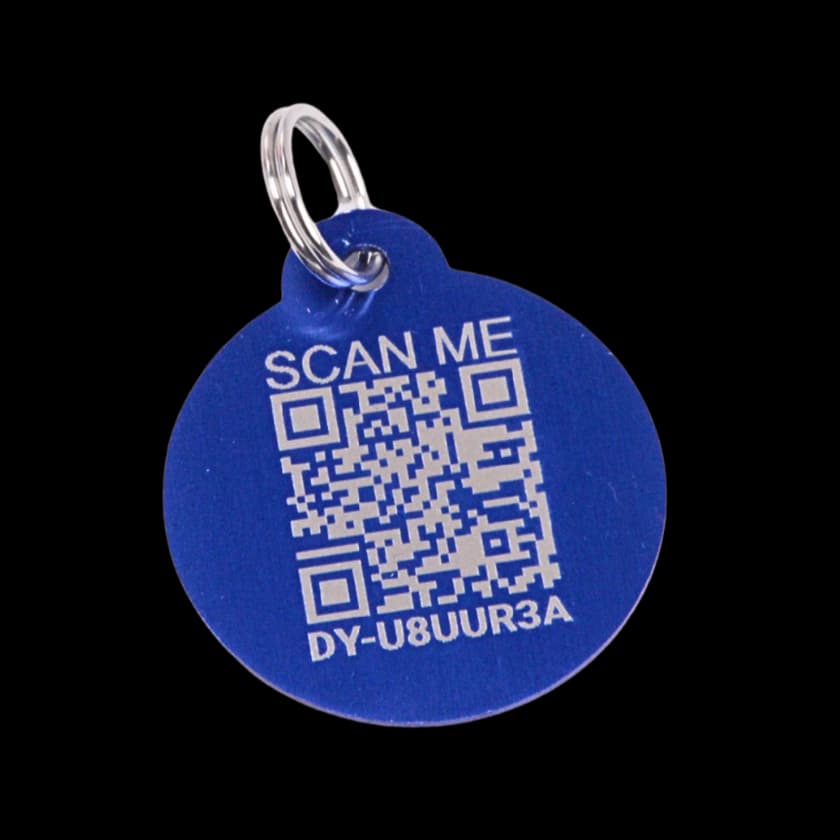
The public page provides a link people can share, with information based on saved details and settings. A scan does not automatically alert the owner, and changing the page does not update text or images already copied into posts. Keep those posts current too.
Sources and further reading
- ASPCA — Lost pet research and recovery. Findings on how lost pets are typically found and the role of neighborhoods and shelters. ASPCA — Finding a lost pet
- American Humane — Lost pet reunification. Owner guidance on contacting shelters, vets, and neighbors. americanhumane.org
- Humane Society of the United States — What to do if you lose your pet. Step-by-step owner-facing guidance. humanesociety.org