
Dog park safety checklist: before you unclip the leash
Observe the park from outside before deciding whether to enter. A check can reveal hazards, but it cannot make every dog or group suitable for off-leash play.
THE DRIYU JOURNAL
Emergency & Safety
In this reading
Quick answer: Check the gates, fencing, crowd, dogs’ behavior, weather, and posted rules from outside. Bring water, bags, and current ID. Confirm that your dog is healthy and that your veterinarian considers this setting appropriate. Skip the visit if you are unsure.
A note about veterinary care
This article is for organization and general education only. It is not veterinary advice, diagnosis, or treatment. Always ask your veterinarian about your pet's health, medications, vaccinations, weight, symptoms, or care plan.
Dog parks are optional. Choose another activity when the group, surroundings, or your dog’s comfort make the visit unsuitable.
The 12-point gate check
- Crowd size. Empty or moderate is best. Packed dog parks raise the odds of conflict and the difficulty of intervening.
- Both gates close fully. Many dog parks have double-gate airlocks. If either gate is broken or propped open, escape risk skyrockets — one panicked dog can be gone in seconds.
- Fence integrity. Walk the perimeter visually before unclipping. Look for gaps, dig holes, or chewed-through wood.
- Supervision. Every dog should have an attentive handler present.
- Toys and food. Loose toys and treats are common resource-guarding triggers. If a dog is hoarding a tennis ball, expect tension.
- Body language of present dogs. Loose play, role reversals, brief breaks — good. Stiff bodies, one-sided chase, repeated pinning — not good. For the field guide, see dog body language: what finders and family should read.
- Your dog’s comfort. Fear, frustration, or difficulty responding to you are reasons to skip the visit.
- Identification. Check that contact details are current and that the collar and tag are suitable for the activity.
- Water. Either the park provides clean water or you brought it. Communal bowls can spread illness; clean bowls or your own.
- Poop bags. Two or three more than you think you need.
- Weather. Avoid dangerous heat; a hand-on-pavement test cannot establish safe air or surface conditions. See heat and paw safety.
- Exit plan. If your dog gets overwhelmed, hurt, or starts trouble, what is the cleanest way out? Know where the gate is and which dog owner you may need to coordinate with.
Before entering the play area
Do not walk a leashed dog through a group of loose dogs as a test. Follow the park’s secure entry procedure and leash rules; if the gate area is crowded or you cannot enter safely, stay out.
During the visit
A few habits that reduce trouble:
- Keep your attention on the dogs and intervene early by ending a visit that is becoming uncomfortable.
- Move every few minutes. Stationary owners stand in clumps; their dogs can pile up.
- Practice recall away from competing dogs. Do not bring food into a group when it could trigger guarding.
- Watch the play ratio. Healthy play has role reversals, breaks, and self-handicapping (the bigger dog letting the smaller dog “win”). One-sided pinning or chasing is bullying.
- If your dog hides behind you repeatedly, the visit is over for today.
Higher-risk situations
- Holidays and weekend afternoons are peak crowds — calmer hours are safer.
- Avoid visits during unsafe heat and keep unwell dogs at home.
- Female dogs in heat should not visit any dog park. Intact males should be evaluated case by case.
- If your dog has any history of reactivity, the dog park is not the place to work on it. A credentialed trainer is.
How Driyu can help
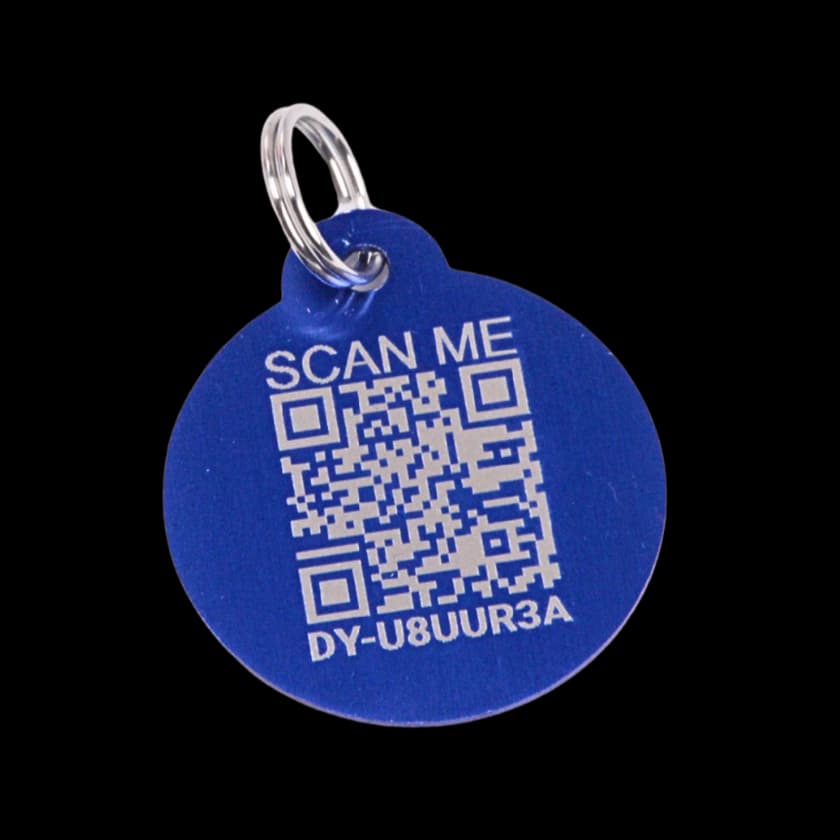
A linked Driyu tag can help a finder open the pet’s contact page if the tag remains attached and an internet connection is available. It does not prevent escapes, track location, or guarantee recovery. Keep microchip registry contacts current too.
Sources and further reading
- American Veterinary Medical Association — Pet behavior resources. Owner-facing guidance on canine social behavior. avma.org
- American Kennel Club — Dog park suitability and entry etiquette.
- IAABC — Behavior consultant resources. Evidence-based perspectives on canine play and dog park dynamics. iaabc.org