
Driyu QR tag vs Bluetooth pet tracker: when to use each
A QR tag gives a finder a way to open contact information. A Bluetooth item tracker can help its owner locate an attached item. Neither guarantees that a lost pet will be found.
THE DRIYU JOURNAL
Pet ID & QR Tags
In this reading
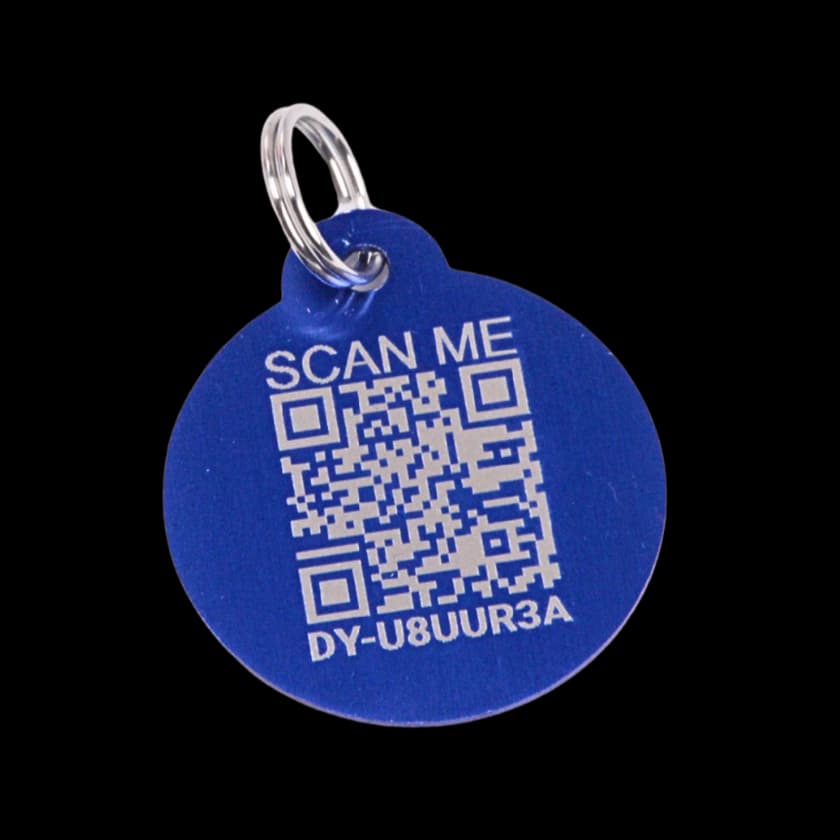
Quick answer: a Driyu QR tag opens a public recovery profile in a browser. Bluetooth item trackers use compatible devices and their own networks to help locate an item; availability varies. Choose identification first, then consider whether an additional locator suits your pet and surroundings.
What each tool does
- Driyu QR tag: a battery-free code that opens the public recovery page when scanned with a compatible camera and internet connection. A person can also revisit a saved profile link.
- Bluetooth item tracker: a battery-powered device. Its usefulness depends on the model, compatible phones, network coverage and the last available location. It does not confirm that the pet is still with the tracker.
Tradeoffs
- Power: the QR tag needs no battery, but the phone does. A tracker needs a working battery; check its manufacturer’s guidance.
- Action: someone opens the QR page; tracker detection depends on compatible equipment and network availability.
- Identification: Driyu shows selected recovery information, not the full private medical record. Some trackers can also display owner contact information in a lost-item workflow.
- Reach: QR scanning requires a readable code and a suitable viewing distance. Bluetooth reach varies; a network location can be delayed or unavailable. Neither is a guaranteed live GPS position.
- Privacy: review the information visible on Driyu’s public page and the tracker provider’s own privacy settings.
When each shines
QR tag: when a finder has the pet in front of them and is figuring out who to call. The Driyu profile is the bridge.
Tracker: it may provide another clue when an item is out of sight. Treat an old location as a lead to check, not proof of where the pet is now.
Using both
If using both, check attachment, weight and collar fit. A QR tag can support contact with a finder; a locator may contribute a search clue. Neither replaces supervision or a registered microchip.
How Driyu fits
Driyu provides a public contact page and owner tools. It does not supply continuous tracking or guarantee a reunion.
Related reads from Driyu
- AirTag, QR tag, or microchip? A plain-language pet ID comparison
- Microchip, QR tag, or both? Understanding how pet ID works in layers
- Driyu tag vs engraved-only tag: a decision framework
Sources and further reading
- Apple — identifying a found AirTag
- Apple — contact information in Lost Mode
- AAHA — pet microchipping questions
Frequently asked questions
Can I put both a Driyu QR tag and a Bluetooth tracker on the same collar?
They can serve different purposes. First check with your veterinarian that the collar setup, weight and attachments are suitable for your pet.
Does Driyu track location?
Driyu is not a live GPS tracker. The QR page supports identification and, in lost mode, a finder-report workflow. A reported location is not a continuous movement trace.
Does an AirTag identify my pet?
An AirTag can expose a lost-item contact message when configured by its owner. That is different from a pet profile or an implanted microchip. See Apple’s instructions for the supported workflow.
Which is more important?
Keep contact identification and microchip registration current. Whether an extra locator is useful depends on your pet, device compatibility and local coverage; it is not a substitute for those basics.