
Indoor cat escape prevention: doors, screens, and balconies
An indoor lifestyle does not eliminate escape risk. Secure exits and current identification are useful preparations even for a cat that normally stays inside.
THE DRIYU JOURNAL
Lost Pet Recovery
In this reading
Quick answer: Check doors, windows, and balconies for escape or fall hazards. Ordinary baby gates and insect screens may not contain a cat. Ask about secure cat-specific barriers and suitable identification; maintain the microchip registration separately.
A note about lost-pet recovery
No tool can guarantee a lost pet will be found. Driyu can help organize information and make contact easier when someone scans or reports a found pet, but recovery also depends on the situation, the finder, local shelters, microchip registration, and your search actions.
A delivery, visitor, or damaged screen can create an unexpected exit. Prepare the home and identification in advance, and begin a prompt, careful search if the cat goes missing.
The three escape routes
Common routes to check include:
- An exterior door, when the cat slips out unnoticed under a leg as someone walks in or out. The classic Amazon-delivery moment.
- A window screen, pushed through or torn by a cat reacting to a bird, leaping at a fly, or simply leaning their full weight against it.
- A balcony or fire escape, where a cat squeezes through a railing gap, falls from a narrow rail, or jumps to a neighboring surface.
Door habits that reduce escape risk
- Create a secure buffer with closed doors where possible. A baby gate alone may be easy for a cat to jump or climb.
- Train a station behavior. Reward the cat for going to a specific bed or perch when the doorbell rings.
- Use a “cat in the apartment” sign for delivery people and visitors.
- Before opening an exterior door, confirm the cat is safely behind a closed interior door.
- Keep a houseguest brief on the cat-at-the-door rule before you let them in.
Window and screen upgrades
- Use properly fitted barriers designed for cats; ordinary insect mesh or a “pet-resistant” material alone does not prove that the frame and fixings are secure.
- Do not assume a three- or four-inch opening is safe. Cats can squeeze through gaps or become trapped in tilted windows; close or properly guard accessible openings.
- Check the frame, mesh, and fastenings regularly for gaps or damage.
- Skip the “cracked window for fresh air” on any window the cat can reach unsupervised.
Balcony safety
Prevent access to unprotected balconies and high windows. Any enclosure should be secure at every edge, suitable for cats, and checked for entanglement hazards; supervise access. Do not rely on a loose net, railing, or pop-up pen to prevent a fall.
The ID layer for cats
Consider identification suited to your cat:
- If using a collar, choose a properly fitted cat breakaway design and check that any tag does not interfere with its release. Ask your vet about suitability and monitor comfort.
- Microchip + current registry. The chip itself is hardware; the registry is what gets a vet or shelter to call you. See microchip registration vs the chip itself.
- A digital pet profile with a current photo. Recent photo, your phone, emergency contacts. For why this matters for cats specifically, see why indoor cats still need ID.
- A short note about cat behavior on the public profile. “Indoor cat — shy, will hide under cars or porches. Please do not chase.”
If your indoor cat does escape
Start searching promptly, including nearby hiding places and areas inside the home. A cat may hide silently, but no distance or time window limits the search. Ask permission to inspect neighboring property, use safe quiet approaches, and contact local shelters. See the lost-cat search guide.
How Driyu can help
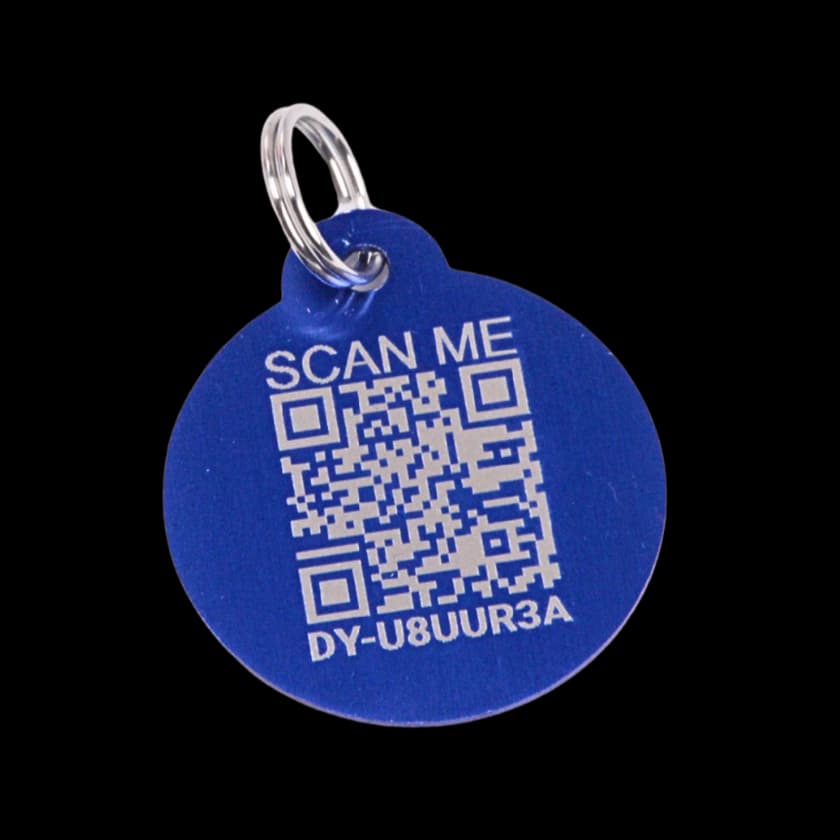
A Driyu tag opens a public profile when it is linked to the cat and the finder has internet access. Check the actual tag’s size and weight with your cat’s breakaway collar; do not assume every combination is suitable. Contact visibility depends on your settings, and public notes should contain only information intended for strangers. The tag is not a tracker.
Sources and further reading
- Indoor Pet Initiative (Ohio State CVM). Indoor cat welfare, enrichment, and escape-prevention guidance. indoorpet.osu.edu
- Cornell Feline Health Center. Feline behavior, safety, and high-rise syndrome resources. vet.cornell.edu
- AAFP / Cat Friendly Practice — Indoor cat welfare. American Association of Feline Practitioners owner resources. catfriendly.com
- ASPCA — Cat care. Owner-facing safety guidance. aspca.org