
Why indoor cats still need ID
Indoor cats can escape during an unexpected open-door moment. Current identification can help a finder contact you even when outdoor access is not part of the cat’s routine.
THE DRIYU JOURNAL
Pet ID & QR Tags
In this reading
Quick answer: Ask your vet about suitable identification, keep microchip registry details current, and consider a properly fitted breakaway collar and appropriate tag. A collar can come off; the microchip provides a separate identification method.
A note about lost-pet recovery
No tool can guarantee a lost pet will be found. Driyu can help organize information and make contact easier when someone scans or reports a found pet, but recovery also depends on the situation, the finder, local shelters, microchip registration, and your search actions.
Visitors, moving, repairs, or an emergency may interrupt a normally secure routine. Identification is worth preparing before that happens.
Why an indoor cat may be difficult to find
A few overlapping reasons:
- Hiding. A frightened cat may stay quiet or fail to respond even to a familiar voice.
- Search promptly. Check inside and nearby hiding places; do not wait for a fixed deadline before reporting the cat missing.
- Unfamiliar surroundings. Do not assume the cat can or will find the way back unaided.
- Identification. A vet or shelter may be able to scan a microchip. A readable tag provides another contact route, without a guaranteed response time.
The low-profile ID setup
Discuss comfort and safety for the individual cat:
- A properly fitted cat breakaway collar, if suitable. Check that the release works as intended and that attachments do not obstruct it.
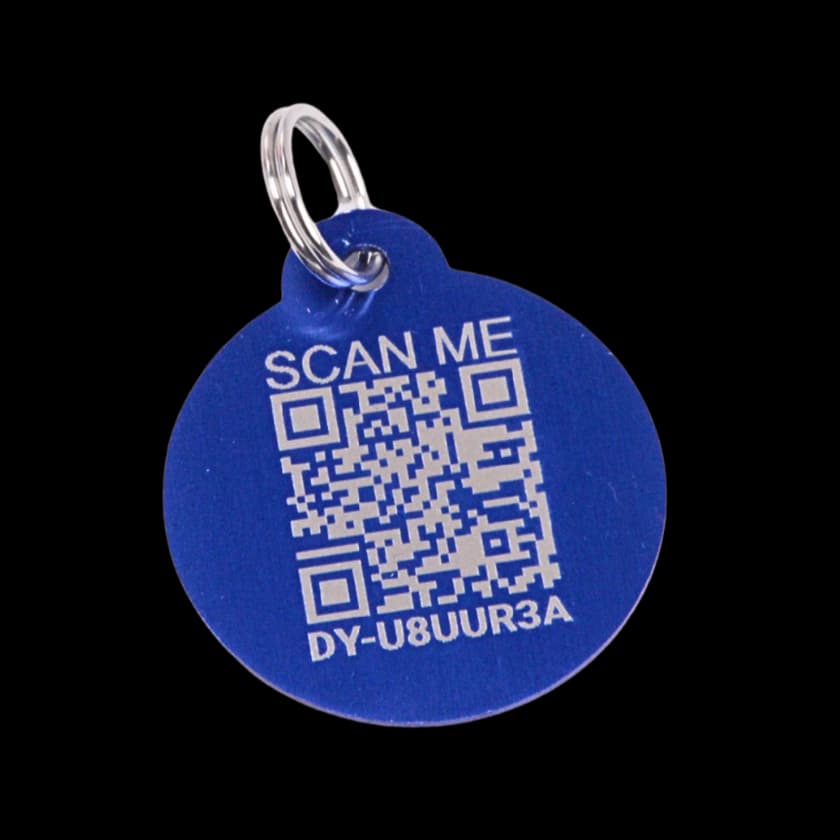
- Small ID tag or QR tag — phone number, optionally the word “Indoor.” QR tags can carry richer info on a scannable page.
- Microchip — placed by your vet during a routine visit. Register the chip with your current contact info; update when you move or change numbers. See microchip registration vs the chip itself.
- A digital pet profile with a current photo. Recent photos make recognition possible — the photo from the adoption file may not look much like your cat today.
Introducing the collar
- Introduce the collar gradually during calm, supervised moments, following fitting instructions.
- Check for rubbing, scratching, distress, or a jaw or leg becoming caught. Remove it safely and seek advice if there is a problem.
- Do not persist for a week through distress. Ask your vet about fit, gradual introduction, and alternatives.
- Recheck fit as weight or size changes; there is no fixed adjustment period.
What goes on a QR-style cat tag
Cat tags benefit from a few specific notes:
- A current photo — cat coats and weights change.
- Your phone, with city and state if you have those toggles on.
- A short public behavior note such as “Indoor cat; please do not chase.” Driyu does not have a dedicated indoor-cat flag.
- A short behavior note: “Shy with strangers — will hide. Please do not chase.”
- One emergency contact in case you cannot answer.
For the broader privacy framing on what to put on a public scan page, see why pet privacy settings matter on a scannable tag.
How Driyu can help
A linked Driyu tag can open your cat’s public profile with an internet connection. Phone and emergency-contact visibility are controlled in account settings; behavior notes may be public. Check the actual tag’s size and weight for your cat and collar. Maintain microchip registration separately. See escape-prevention guidance.
Sources and further reading
- American Association of Feline Practitioners / Cat Friendly. Owner-facing recommendations on identification and collars for cats. catfriendly.com
- Cornell Feline Health Center. Veterinary resources on cat welfare and lost-cat recovery. vet.cornell.edu
- American Veterinary Medical Association — Microchipping FAQ. Layered ID and registry guidance. AVMA — Microchipping your pet · PDF